Captive power transfer pricing and non-resident export commission rules support deletion of adjustments and withholding disallowance in discussed proc...
Cooperative society deposits, member-interest TDS exemption and credit-facility deduction claims require verification through records and supporting e...
Customs jurisdiction over EPCG condition breaches survives export-obligation discharge certificates, requiring alleged fraud and misdeclaration to be ...
Contractual tolerance requires consideration; breach recoveries, qualifying public infrastructure services and road works escape service tax liability...
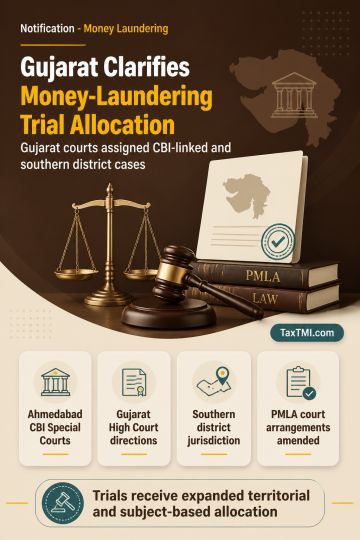
The High Court affirmed the independence of proceedings under the PMLA, clarifying that while the outcome of the scheduled offense may have some bearing on the PMLA case, the prosecution must independently prove the allegations under the PMLA. - The Court criticized the complainant for presuming that the scheduled offense automatically generated proceeds of crime, emphasizing the need for independent proof. It noted deficiencies in the evidence presented by the prosecution, particularly regarding the source of the alleged proceeds of crime. - Ultimately, the High Court concluded that the appeal lacked merit and upheld the trial court's decision to dismiss the complaint. It emphasized that an acquittal should not be disturbed unless there are serious legal infirmities or factual errors, which were not present in this case.
The High Court affirmed the independence of proceedings under the PMLA, clarifying that while the outcome of the scheduled offense may have some bearing on the PMLA case, the prosecution must independently prove the allegations under the PMLA. - The Court criticized the complainant for presuming that the scheduled offense automatically generated proceeds of crime, emphasizing the need for independent proof. It noted deficiencies in the evidence presented by the prosecution, particularly regarding the source of the alleged proceeds of crime. - Ultimately, the High Court concluded that the appeal lacked merit and upheld the trial court's decision to dismiss the complaint. It emphasized that an acquittal should not be disturbed unless there are serious legal infirmities or factual errors, which were not present in this case.
Note: It is a system-generated summary and is for quick reference only.
 TaxTMI
 of 4798


















 Join Channel


 TaxTMI