Dispute Resolution Panel objections must reach both prescribed forums; otherwise assessment may proceed and statutory appeal remains the proper remedy...
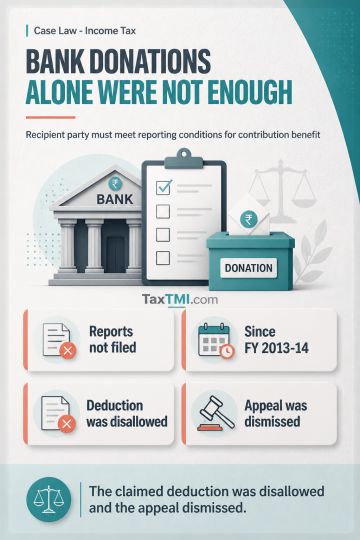
Political contribution deductions require recipient party compliance with contribution-reporting conditions; banking-channel donations alone do not qu...
Aggregation under TNMM prevents selective testing of intra-group services without comparable uncontrolled transactions, while appellate additional cla...
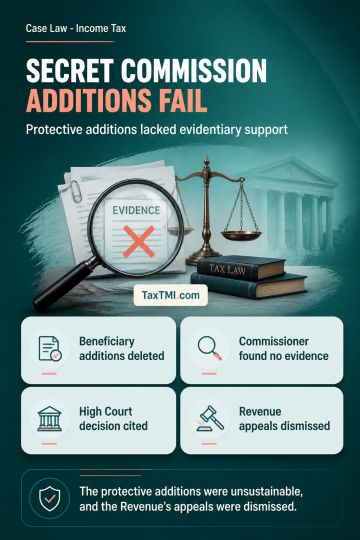
Protective assessment cannot duplicate identical receipts under competing characterisations; remote services did not establish a taxable permanent est...
Current account treatment of overseas tournament services removed most FEMA findings, but excess EEFC remittance and delayed repatriation remained bre...
Page of 4794
Press 'Enter' after typing page number.
521 to 540 of 95875 Results
❮
❯
❯❯
0 / 200
Expand Note
Add to Folder
No Folders have been created
+
Are you sure you want to delete "My most important" ?
The High Court affirmed the independence of proceedings under the PMLA, clarifying that while the outcome of the scheduled offense may have some bearing on the PMLA case, the prosecution must independently prove the allegations under the PMLA. - The Court criticized the complainant for presuming that the scheduled offense automatically generated proceeds of crime, emphasizing the need for independent proof. It noted deficiencies in the evidence presented by the prosecution, particularly regarding the source of the alleged proceeds of crime. - Ultimately, the High Court concluded that the appeal lacked merit and upheld the trial court's decision to dismiss the complaint. It emphasized that an acquittal should not be disturbed unless there are serious legal infirmities or factual errors, which were not present in this case.
The High Court affirmed the independence of proceedings under the PMLA, clarifying that while the outcome of the scheduled offense may have some bearing on the PMLA case, the prosecution must independently prove the allegations under the PMLA. - The Court criticized the complainant for presuming that the scheduled offense automatically generated proceeds of crime, emphasizing the need for independent proof. It noted deficiencies in the evidence presented by the prosecution, particularly regarding the source of the alleged proceeds of crime. - Ultimately, the High Court concluded that the appeal lacked merit and upheld the trial court's decision to dismiss the complaint. It emphasized that an acquittal should not be disturbed unless there are serious legal infirmities or factual errors, which were not present in this case.
Note: It is a system-generated summary and is for quick reference only.
 TaxTMI
 of 4794




















 Join Channel


 TaxTMI