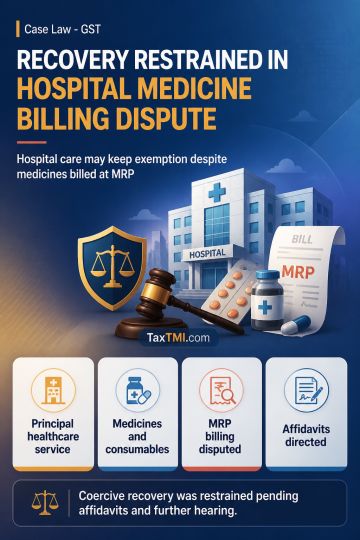
Composite inpatient healthcare supply may retain exemption despite MRP medicine billing, while separate taxable sale characterisation remains disputed...
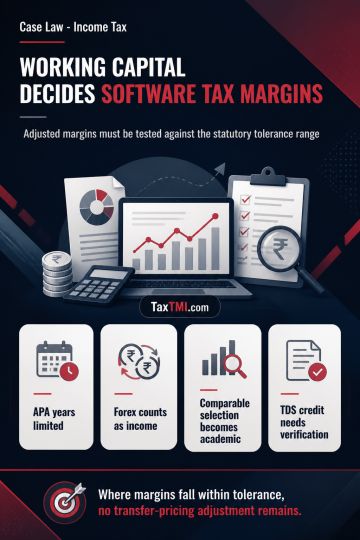
Working-capital adjustment determines whether software-services transfer-pricing margins fall within the statutory tolerance range, eliminating any ad...
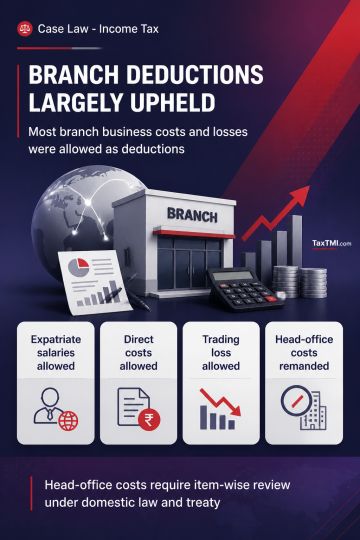
Permanent establishment deductions upheld for expatriate salaries, direct costs and trading losses, while head-office costs require fresh classificati...
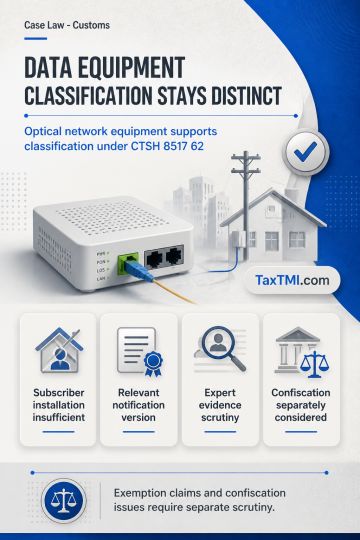
Data transmission equipment classification under CTSH 8517 62 remains distinct from residual classification, with exemption evidence requiring scrutin...
The High Court dismissed the petitions seeking to quash the criminal complaint under the Prevention of Money-Laundering Act, 2002 (PMLA). The petitioners argued that the complaint lacked sufficient grounds, as the predicate offense initiated by the CBI was pending, and there was no evidence linking the funds used for property purchase to proceeds of crime. However, the court upheld the constitutionality and interpretation of the PMLA as clarified by the Supreme Court in Vijay Madanlal Choudhary case. It emphasized that money laundering is a continuous process, and prosecution under the PMLA can be initiated independently of the status of the scheduled offense.
The High Court dismissed the petitions seeking to quash the criminal complaint under the Prevention of Money-Laundering Act, 2002 (PMLA). The petitioners argued that the complaint lacked sufficient grounds, as the predicate offense initiated by the CBI was pending, and there was no evidence linking the funds used for property purchase to proceeds of crime. However, the court upheld the constitutionality and interpretation of the PMLA as clarified by the Supreme Court in Vijay Madanlal Choudhary case. It emphasized that money laundering is a continuous process, and prosecution under the PMLA can be initiated independently of the status of the scheduled offense.
Note: It is a system-generated summary and is for quick reference only.
 TaxTMI
 of 4803








 Join Channel


 TaxTMI
