Approved resolution plans extinguish unsubmitted pre-approval tax claims, preventing later recovery outside the insolvency process and preserving a cl...
Transfer pricing comparability requires functional alignment and permits working capital adjustment, while APA margins cannot govern non-covered years...
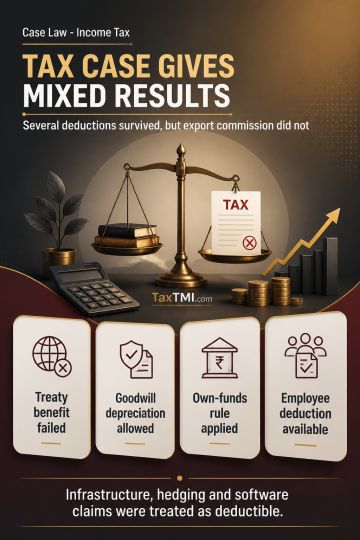
Treaty benefit, goodwill depreciation and hedging costs: export commission disallowed, while key business deductions and depreciation claims succeeded...
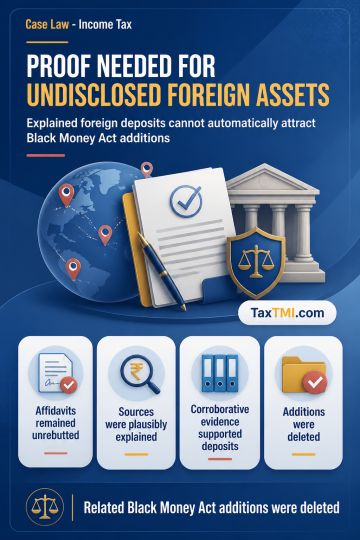
Undisclosed foreign asset classification requires an unexplained source; unrebutted affidavits and corroborative evidence defeated the Black Money Act...
The High Court dismissed the petitions seeking to quash the criminal complaint under the Prevention of Money-Laundering Act, 2002 (PMLA). The petitioners argued that the complaint lacked sufficient grounds, as the predicate offense initiated by the CBI was pending, and there was no evidence linking the funds used for property purchase to proceeds of crime. However, the court upheld the constitutionality and interpretation of the PMLA as clarified by the Supreme Court in Vijay Madanlal Choudhary case. It emphasized that money laundering is a continuous process, and prosecution under the PMLA can be initiated independently of the status of the scheduled offense.
The High Court dismissed the petitions seeking to quash the criminal complaint under the Prevention of Money-Laundering Act, 2002 (PMLA). The petitioners argued that the complaint lacked sufficient grounds, as the predicate offense initiated by the CBI was pending, and there was no evidence linking the funds used for property purchase to proceeds of crime. However, the court upheld the constitutionality and interpretation of the PMLA as clarified by the Supreme Court in Vijay Madanlal Choudhary case. It emphasized that money laundering is a continuous process, and prosecution under the PMLA can be initiated independently of the status of the scheduled offense.
Note: It is a system-generated summary and is for quick reference only.
 TaxTMI
 of 4803










 Join Channel


 TaxTMI