Article 8 treaty coverage excluded third-party airline support services, while documented demonetisation cash receipts remained accepted business inco...
Functional comparability under TNMM requires highway contract benchmarks to reflect operation, maintenance and transfer activities, requiring fresh be...
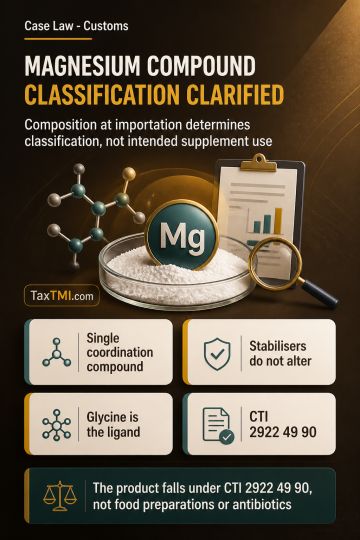
Objective characteristics govern magnesium bis-glycinate chelate classification as an amino-acid coordination compound, not a food preparation or anti...
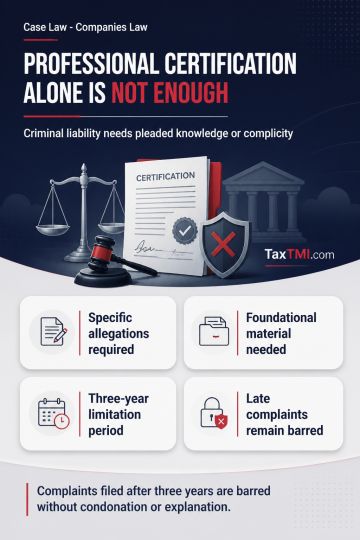
Independent professional certification requires pleaded knowledge or complicity for criminal liability; untimely complaints remain barred by limitatio...
Container storage charges - The High Court upheld the decision of the single judge, stating that since the goods were indeed confiscated by customs authorities while in transit, the port trust was justified in levying container storage charges. The appellant's inactivity after requesting permission to de-stuff the goods did not absolve them of liability. The court dismissed the appellant's argument that containers could not be considered "goods" under the Customs Act. It upheld the legality of the customs authorities' orders of confiscation, as they had the power to confiscate both goods and containers under Section 111(d) of the Customs Act.
Container storage charges - The High Court upheld the decision of the single judge, stating that since the goods were indeed confiscated by customs authorities while in transit, the port trust was justified in levying container storage charges. The appellant's inactivity after requesting permission to de-stuff the goods did not absolve them of liability. The court dismissed the appellant's argument that containers could not be considered "goods" under the Customs Act. It upheld the legality of the customs authorities' orders of confiscation, as they had the power to confiscate both goods and containers under Section 111(d) of the Customs Act.
Note: It is a system-generated summary and is for quick reference only.
 TaxTMI
 of 4800








 Join Channel


 TaxTMI
