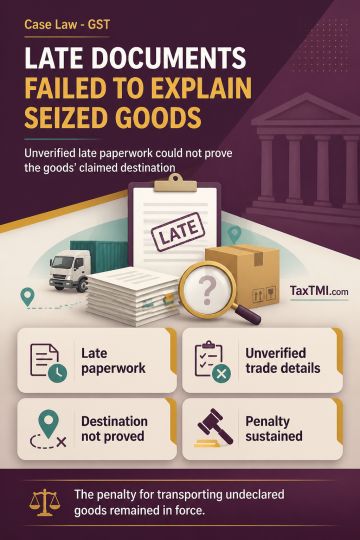
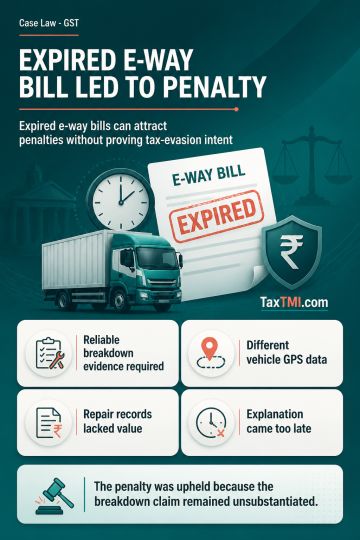
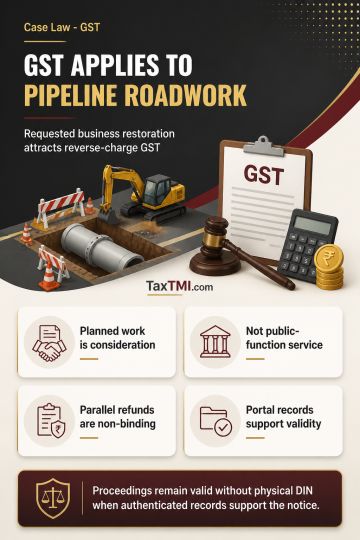
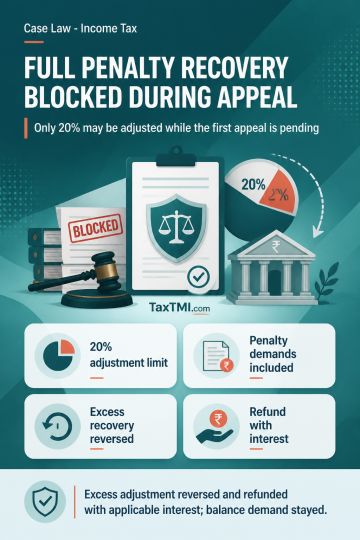
Delayed transport documents failed to validate intercepted goods, sustaining transit-state penalties where the claimed interstate destination remained...
Penalty u/s. 271(1)(c) - The Revenue argued that the assessee's actions constituted furnishing inaccurate particulars of income or concealing income. However, the High Court disagreed, ruling that the claim for deductions was bona fide and directly linked to the business profit. They emphasized that the mere rejection of a claim by the Assessing Officer does not automatically result in the imposition of penalties under Section 271(1)(c). Therefore, the High Court concluded that no substantial questions of law arose from the case and dismissed the appeal of the Revenue.
Penalty u/s. 271(1)(c) - The Revenue argued that the assessee's actions constituted furnishing inaccurate particulars of income or concealing income. However, the High Court disagreed, ruling that the claim for deductions was bona fide and directly linked to the business profit. They emphasized that the mere rejection of a claim by the Assessing Officer does not automatically result in the imposition of penalties under Section 271(1)(c). Therefore, the High Court concluded that no substantial questions of law arose from the case and dismissed the appeal of the Revenue.
Note: It is a system-generated summary and is for quick reference only.
 TaxTMI
  TaxTMI
 of 4920