Donor-directed corpus contributions retain capital character despite exemption claims under section 10(23C)(vi), preventing their treatment as taxable...
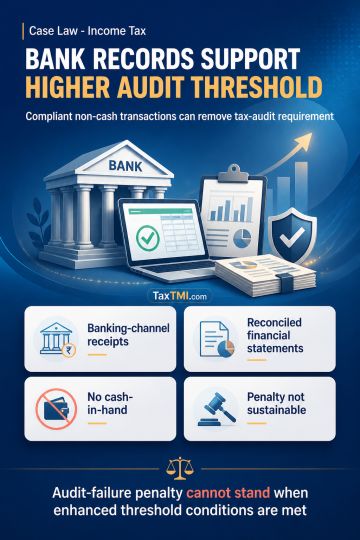
Enhanced tax-audit threshold applies where banking records establish compliant non-cash receipts and payments, eliminating penalty exposure for audit ...
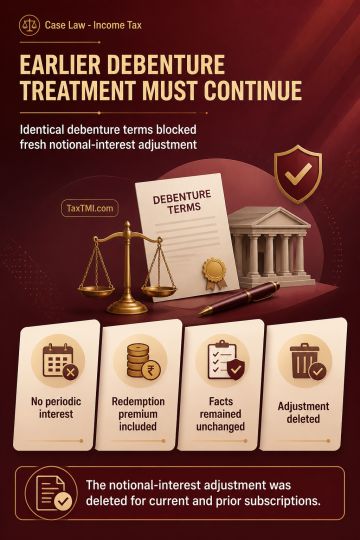
Transfer pricing consistency protects identical non-interest-bearing debenture terms from a later notional-interest adjustment without valid statutory...
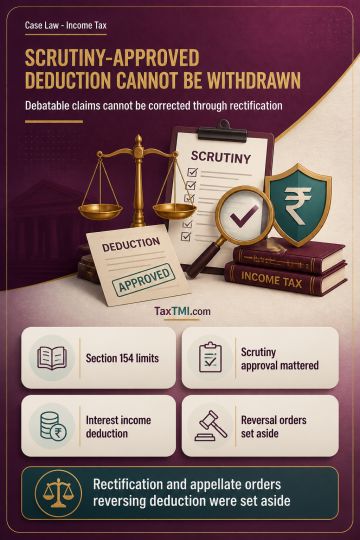
Rectification of debatable deduction claims cannot reverse scrutiny-approved co-operative society interest income deductions as apparent record errors...
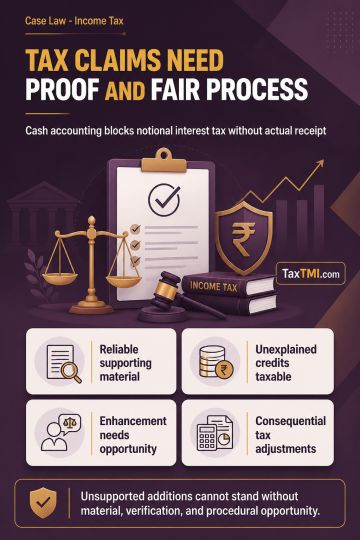
Cash-method accounting bars presumptive interest taxation, while unsupported securities and share-trading additions require reliable material and veri...
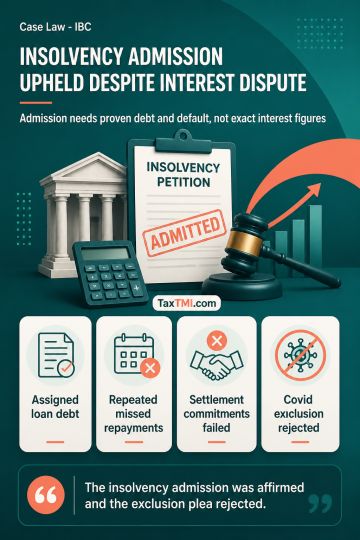
Section 7 admission requires established financial debt and default, not precise interest quantification, while post-suspension defaults remain action...
Page of 4811
Press 'Enter' after typing page number.
141 to 160 of 96208 Results
❮
❯
❯❯
0 / 200
Expand Note
Add to Folder
No Folders have been created
+
Are you sure you want to delete "My most important" ?
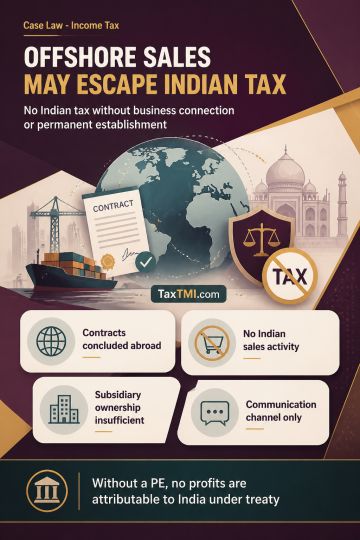
Income taxable in India or not - Taxation of Technical Collaboration Fees @ 10% u/s. 9(1)(vii) r.w.s 115A(1)(b) - The Appellate Tribunal considered the arguments presented by both parties and examined relevant provisions of the Income Tax Act and the India-Mauritius tax treaty. It noted that the assessee, being a foreign company, did not have a permanent establishment (PE) in India. Additionally, there was no specific clause in the tax treaty addressing the taxability of the income in question. - ITAT held that in the absence of a permanent establishment and specific treaty provisions, the income should be treated as business profits and is not taxable in India.
Income taxable in India or not - Taxation of Technical Collaboration Fees @ 10% u/s. 9(1)(vii) r.w.s 115A(1)(b) - The Appellate Tribunal considered the arguments presented by both parties and examined relevant provisions of the Income Tax Act and the India-Mauritius tax treaty. It noted that the assessee, being a foreign company, did not have a permanent establishment (PE) in India. Additionally, there was no specific clause in the tax treaty addressing the taxability of the income in question. - ITAT held that in the absence of a permanent establishment and specific treaty provisions, the income should be treated as business profits and is not taxable in India.
Note: It is a system-generated summary and is for quick reference only.
 TaxTMI
  TaxTMI
 of 4811









 Join Channel