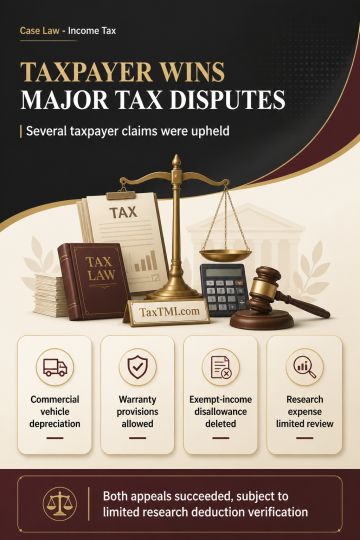
Commercial vehicle depreciation, scientifically determined warranty provisions and exempt-income disallowances were resolved in favour of the taxpayer...
Inherited property sale proceeds require capital-gains treatment where ownership is supported by evidence, not suspicion or unverified signature doubt...
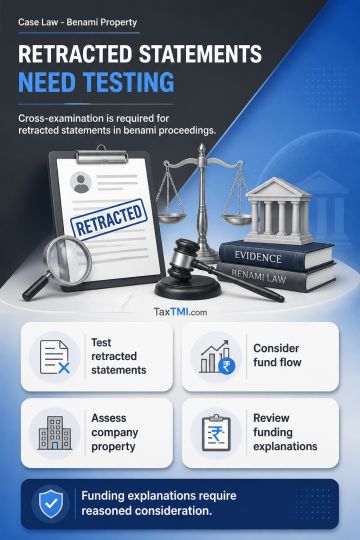
Cross-examination of retracted statements is essential where foundational evidence supports a benami allegation and documented funding explanations re...
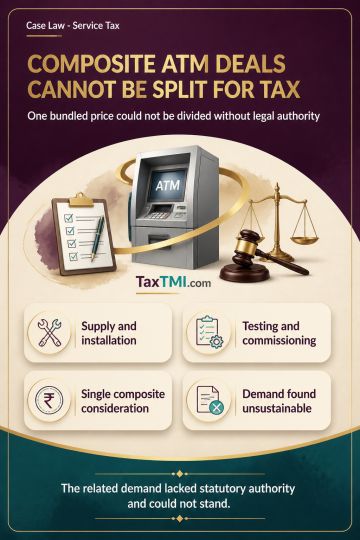
Capital-goods exemption covers plant-modernisation accessories, while the import restriction applies only to earlier capital-goods components and spar...
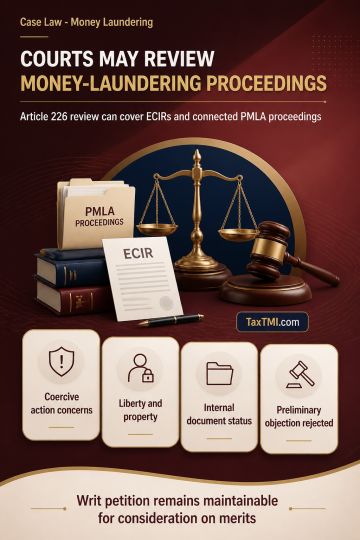
Constitutional judicial review permits challenges to ECIRs and connected money-laundering proceedings where coercive action affects fundamental intere...
Time Limitation - Curable Defect - Electronic Filing Compliance - Procedural Compliances vs. Substantive Rights: - The High Court found that the petitioners complied with the e-filing requirements, evidenced by the generation of an e-filing number. This compliance, despite the subsequent procedural deficiency, was considered as filing within the limitation period. The "Document not serial" error, a result of technical failures, was deemed a curable defect. Importantly, the Court opined that procedural compliances, including those encountered in the e-filing process, should not defeat the substantive rights of the parties. The essence of the ruling was that technical glitches should not bar access to legal remedies, particularly when the initial attempt to file was made within the prescribed limitation period.
Time Limitation - Curable Defect - Electronic Filing Compliance - Procedural Compliances vs. Substantive Rights: - The High Court found that the petitioners complied with the e-filing requirements, evidenced by the generation of an e-filing number. This compliance, despite the subsequent procedural deficiency, was considered as filing within the limitation period. The "Document not serial" error, a result of technical failures, was deemed a curable defect. Importantly, the Court opined that procedural compliances, including those encountered in the e-filing process, should not defeat the substantive rights of the parties. The essence of the ruling was that technical glitches should not bar access to legal remedies, particularly when the initial attempt to file was made within the prescribed limitation period.
Note: It is a system-generated summary and is for quick reference only.
 TaxTMI
  TaxTMI
 of 4827








 Join Channel


