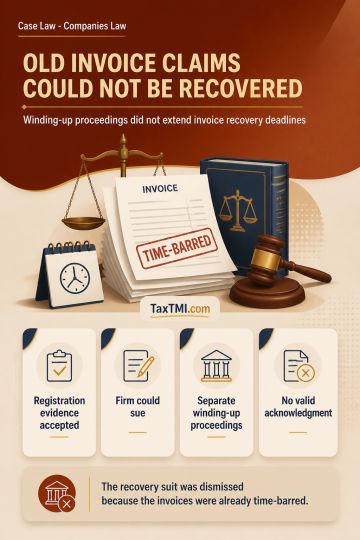
Invoice-based recovery claims remain time-barred despite separate winding-up proceedings, absent valid acknowledgment or part-payment of the disputed ...
Extended limitation fails without specific suppression allegations, while overseas employee secondment remains taxable as manpower supply within norma...
Time-share accommodation classification excludes Club or Association Service where purchasers receive contractual occupancy rights without genuine mem...
CENVAT credit for trading requires reversal, while taxable-service rental credit remains proportionately available and limitation issues await resolut...
Vicarious liability for dishonoured company cheques may extend to non-signatory directors where complaints contain foundational responsibility avermen...
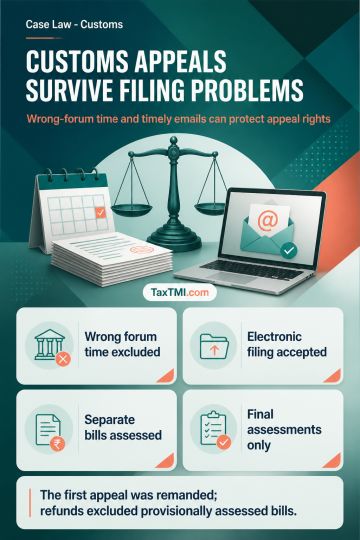
Time Limitation - Curable Defect - Electronic Filing Compliance - Procedural Compliances vs. Substantive Rights: - The High Court found that the petitioners complied with the e-filing requirements, evidenced by the generation of an e-filing number. This compliance, despite the subsequent procedural deficiency, was considered as filing within the limitation period. The "Document not serial" error, a result of technical failures, was deemed a curable defect. Importantly, the Court opined that procedural compliances, including those encountered in the e-filing process, should not defeat the substantive rights of the parties. The essence of the ruling was that technical glitches should not bar access to legal remedies, particularly when the initial attempt to file was made within the prescribed limitation period.
Time Limitation - Curable Defect - Electronic Filing Compliance - Procedural Compliances vs. Substantive Rights: - The High Court found that the petitioners complied with the e-filing requirements, evidenced by the generation of an e-filing number. This compliance, despite the subsequent procedural deficiency, was considered as filing within the limitation period. The "Document not serial" error, a result of technical failures, was deemed a curable defect. Importantly, the Court opined that procedural compliances, including those encountered in the e-filing process, should not defeat the substantive rights of the parties. The essence of the ruling was that technical glitches should not bar access to legal remedies, particularly when the initial attempt to file was made within the prescribed limitation period.
Note: It is a system-generated summary and is for quick reference only.
 TaxTMI
  TaxTMI
 of 4826












 Join Channel