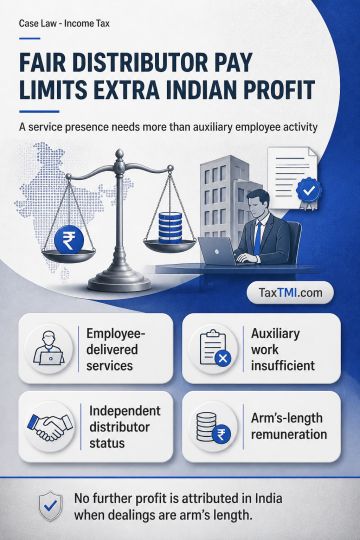
Service permanent establishment requires non-auxiliary services, while arm's-length distributor remuneration precludes further profit attribution in I...
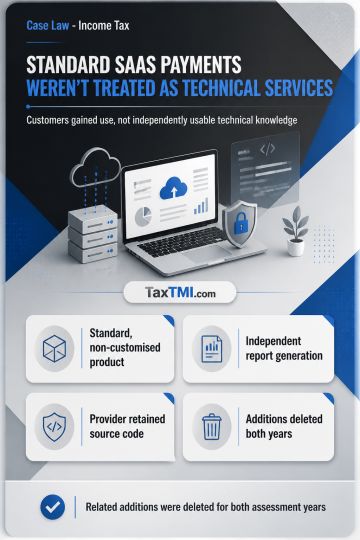
Make-available condition excludes standard SaaS subscription receipts where customers receive no independently usable technical knowledge after subscr...
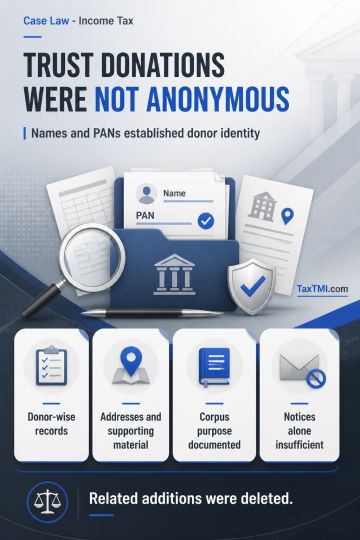
Anonymous donation classification fails where charitable trusts maintain undisputed donor identity records and evidence corpus contributions' intended...
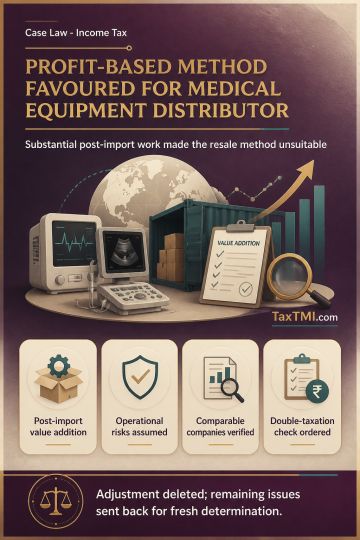
Transfer pricing method selection favours TNMM where medical-equipment distribution involves substantial post-import value addition and operational ri...
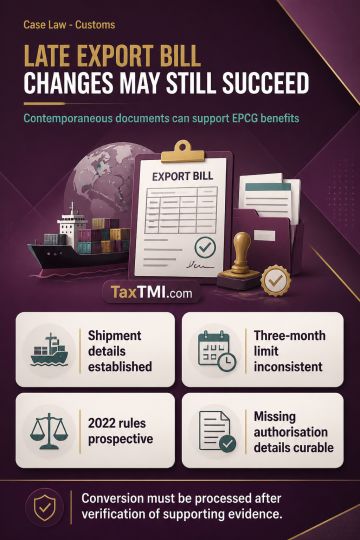
Post-export shipping bill conversion remains available where contemporaneous evidence supports EPCG benefits despite curable procedural omissions and ...
Time Limitation - Curable Defect - Electronic Filing Compliance - Procedural Compliances vs. Substantive Rights: - The High Court found that the petitioners complied with the e-filing requirements, evidenced by the generation of an e-filing number. This compliance, despite the subsequent procedural deficiency, was considered as filing within the limitation period. The "Document not serial" error, a result of technical failures, was deemed a curable defect. Importantly, the Court opined that procedural compliances, including those encountered in the e-filing process, should not defeat the substantive rights of the parties. The essence of the ruling was that technical glitches should not bar access to legal remedies, particularly when the initial attempt to file was made within the prescribed limitation period.
Time Limitation - Curable Defect - Electronic Filing Compliance - Procedural Compliances vs. Substantive Rights: - The High Court found that the petitioners complied with the e-filing requirements, evidenced by the generation of an e-filing number. This compliance, despite the subsequent procedural deficiency, was considered as filing within the limitation period. The "Document not serial" error, a result of technical failures, was deemed a curable defect. Importantly, the Court opined that procedural compliances, including those encountered in the e-filing process, should not defeat the substantive rights of the parties. The essence of the ruling was that technical glitches should not bar access to legal remedies, particularly when the initial attempt to file was made within the prescribed limitation period.
Note: It is a system-generated summary and is for quick reference only.
 TaxTMI
  TaxTMI
 of 4821






 Join Channel