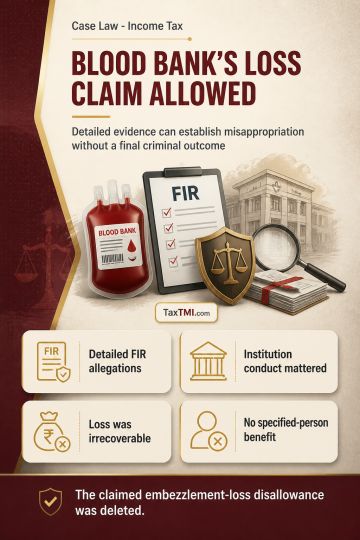
Embezzlement losses in charitable institutions remain allowable when misappropriation is established, irrecoverable, and not a specified-person benefi...
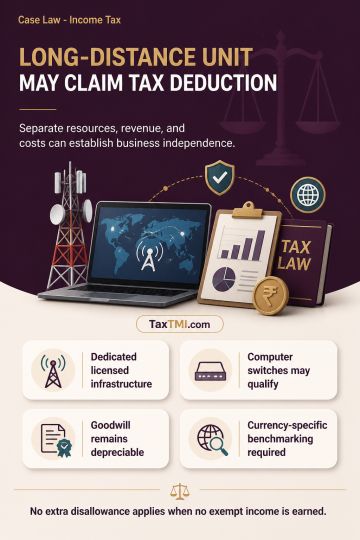
National long-distance undertaking status supports deduction where separately licensed infrastructure, resources, revenue, and expenditure establish c...
Agency reimbursement income follows contractual deposit-liability computation, while pending deposit collections do not constitute deemed-dividend loa...
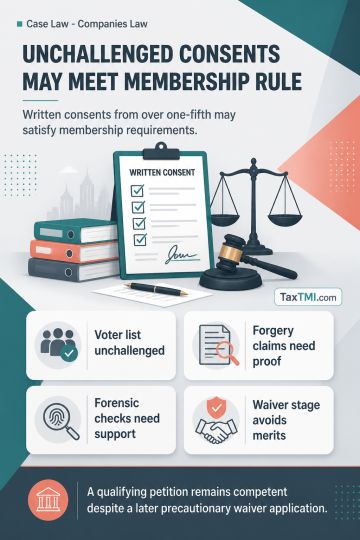
Membership-consent thresholds for oppression petitions are satisfied by unchallenged voter-list consents, while unsupported forgery claims require pro...
Rejection of refund claim - The Tribunal observed that a pre-notice consultation was issued to the appellant, who responded by paying the demanded duty and interest. As the payment was made in response to the consultation, the court found no grounds for further action by the revenue. - The CESTAT rejected the appellant's argument that they had no further responsibility after making the payment. It held that both the revenue and the appellant are bound by Section 28, and the appellant's acceptance of the proposal in the consultation precluded the need for a show cause notice.
Rejection of refund claim - The Tribunal observed that a pre-notice consultation was issued to the appellant, who responded by paying the demanded duty and interest. As the payment was made in response to the consultation, the court found no grounds for further action by the revenue. - The CESTAT rejected the appellant's argument that they had no further responsibility after making the payment. It held that both the revenue and the appellant are bound by Section 28, and the appellant's acceptance of the proposal in the consultation precluded the need for a show cause notice.
Note: It is a system-generated summary and is for quick reference only.
 TaxTMI
  TaxTMI
 of 4881