Development agreements require legal possession or effective enjoyment for capital gains transfer; permissive possession and deferred consideration de...
Prolonged sterilisation of development rights supports capital-gains treatment, while business-income disallowances cannot govern capital-gains comput...
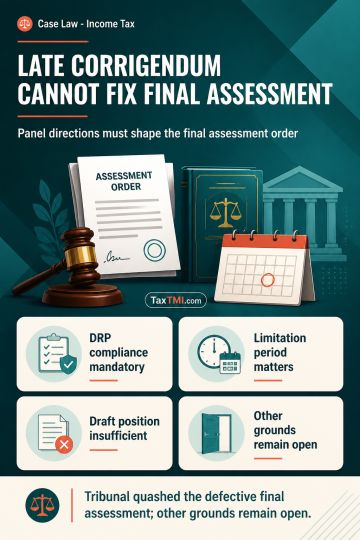
Additional evidence in transfer pricing dispute leads to fresh examination, while tax deductions, TDS credit, fee and refund interest require verifica...
Category II AIF pass-through taxation preserves non-business income character; investment receipts cannot be reclassified without applying recognised ...
Mutual fund maturity rules require proper rollover, redemption, disclosure, and due diligence; investor gains cannot excuse regulatory breaches or pen...
Levy / Demand of Countervailing Duty (CVD) - whether the appellant, who purchased software from a subsidiary company and had it directly imported to them, could be considered the importer - As per the precedent, the appellant was considered the importer of the software. - The CESTAT analyzed the circumstances and determined that since the appellant believed in good faith that they were not the importer, the issue was interpretational. Consequently, the Tribunal found no grounds to invoke the extended period for demanding duty payment, as the appellant acted in good faith and did not intend to evade duty. Moreover, the CESTAT ruled in favor of the appellant regarding the imposition of interest on the CVD, aligning with a previous Supreme Court decision.
Levy / Demand of Countervailing Duty (CVD) - whether the appellant, who purchased software from a subsidiary company and had it directly imported to them, could be considered the importer - As per the precedent, the appellant was considered the importer of the software. - The CESTAT analyzed the circumstances and determined that since the appellant believed in good faith that they were not the importer, the issue was interpretational. Consequently, the Tribunal found no grounds to invoke the extended period for demanding duty payment, as the appellant acted in good faith and did not intend to evade duty. Moreover, the CESTAT ruled in favor of the appellant regarding the imposition of interest on the CVD, aligning with a previous Supreme Court decision.
Note: It is a system-generated summary and is for quick reference only.
 TaxTMI
 of 4798


















 Join Channel


 TaxTMI
