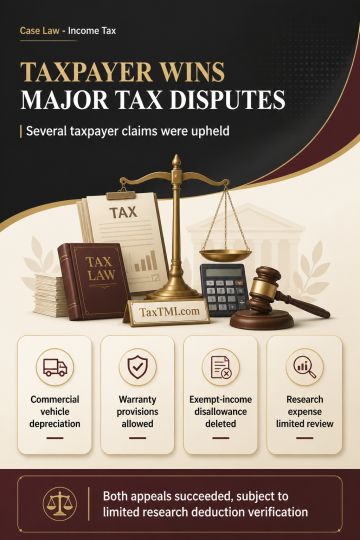
Commercial vehicle depreciation, scientifically determined warranty provisions and exempt-income disallowances were resolved in favour of the taxpayer...
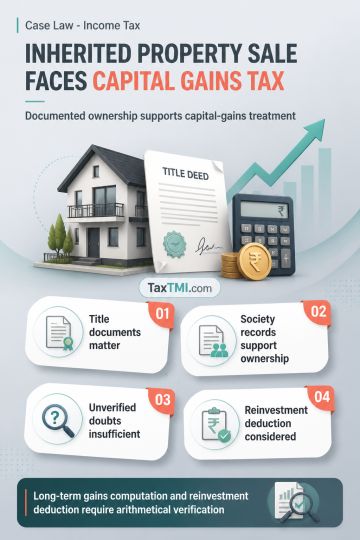
Inherited property sale proceeds require capital-gains treatment where ownership is supported by evidence, not suspicion or unverified signature doubt...
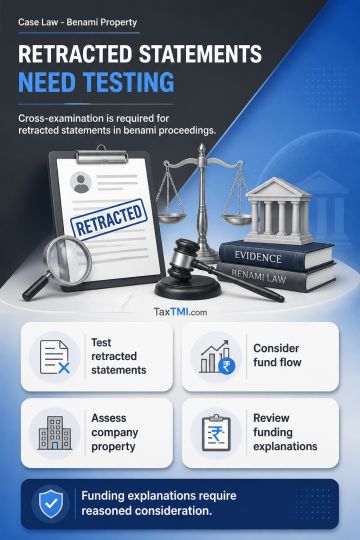
Cross-examination of retracted statements is essential where foundational evidence supports a benami allegation and documented funding explanations re...
Capital-goods exemption covers plant-modernisation accessories, while the import restriction applies only to earlier capital-goods components and spar...
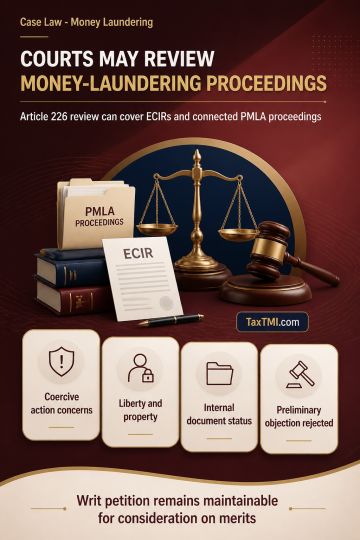
Constitutional judicial review permits challenges to ECIRs and connected money-laundering proceedings where coercive action affects fundamental intere...
Levy / Demand of Countervailing Duty (CVD) - whether the appellant, who purchased software from a subsidiary company and had it directly imported to them, could be considered the importer - As per the precedent, the appellant was considered the importer of the software. - The CESTAT analyzed the circumstances and determined that since the appellant believed in good faith that they were not the importer, the issue was interpretational. Consequently, the Tribunal found no grounds to invoke the extended period for demanding duty payment, as the appellant acted in good faith and did not intend to evade duty. Moreover, the CESTAT ruled in favor of the appellant regarding the imposition of interest on the CVD, aligning with a previous Supreme Court decision.
Levy / Demand of Countervailing Duty (CVD) - whether the appellant, who purchased software from a subsidiary company and had it directly imported to them, could be considered the importer - As per the precedent, the appellant was considered the importer of the software. - The CESTAT analyzed the circumstances and determined that since the appellant believed in good faith that they were not the importer, the issue was interpretational. Consequently, the Tribunal found no grounds to invoke the extended period for demanding duty payment, as the appellant acted in good faith and did not intend to evade duty. Moreover, the CESTAT ruled in favor of the appellant regarding the imposition of interest on the CVD, aligning with a previous Supreme Court decision.
Note: It is a system-generated summary and is for quick reference only.
 TaxTMI
 of 4782








 Join Channel


 TaxTMI
