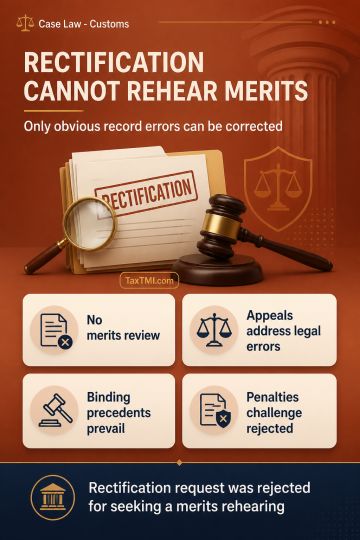
Rectification of mistake remains limited to self-evident record errors, preventing merits review through miscellaneous applications and preserving fin...
Tender creditworthiness conditions may extend to de facto Promoter Directors, with post-participation challenges generally barred absent arbitrariness...
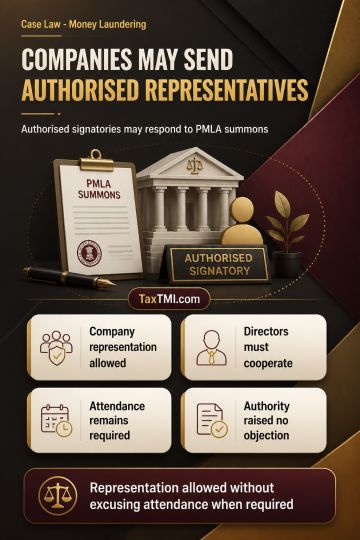
Corporate representation in PMLA summons proceedings permitted through an authorised signatory, subject to directors' continuing cooperation and atten...
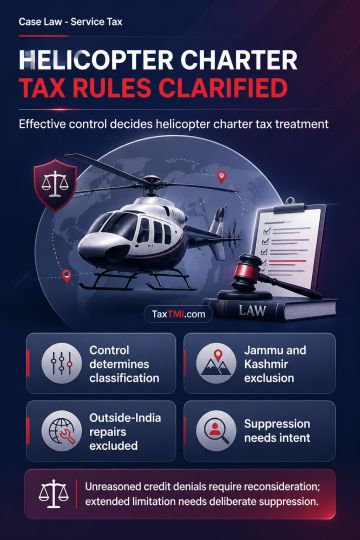
Helicopter charter classification requires effective control analysis, while territorial performance, reasoned credit orders and wilful suppression de...
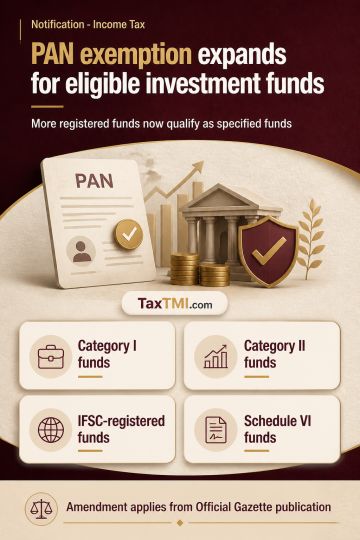
Specified fund definition expands PAN exemption eligibility for registered alternative investment funds and qualifying International Financial Service...
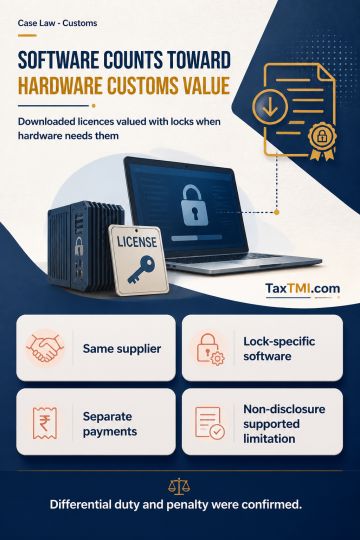
Levy / Demand of Countervailing Duty (CVD) - whether the appellant, who purchased software from a subsidiary company and had it directly imported to them, could be considered the importer - As per the precedent, the appellant was considered the importer of the software. - The CESTAT analyzed the circumstances and determined that since the appellant believed in good faith that they were not the importer, the issue was interpretational. Consequently, the Tribunal found no grounds to invoke the extended period for demanding duty payment, as the appellant acted in good faith and did not intend to evade duty. Moreover, the CESTAT ruled in favor of the appellant regarding the imposition of interest on the CVD, aligning with a previous Supreme Court decision.
Levy / Demand of Countervailing Duty (CVD) - whether the appellant, who purchased software from a subsidiary company and had it directly imported to them, could be considered the importer - As per the precedent, the appellant was considered the importer of the software. - The CESTAT analyzed the circumstances and determined that since the appellant believed in good faith that they were not the importer, the issue was interpretational. Consequently, the Tribunal found no grounds to invoke the extended period for demanding duty payment, as the appellant acted in good faith and did not intend to evade duty. Moreover, the CESTAT ruled in favor of the appellant regarding the imposition of interest on the CVD, aligning with a previous Supreme Court decision.
Note: It is a system-generated summary and is for quick reference only.
 TaxTMI
 of 4790








 Join Channel


 TaxTMI
