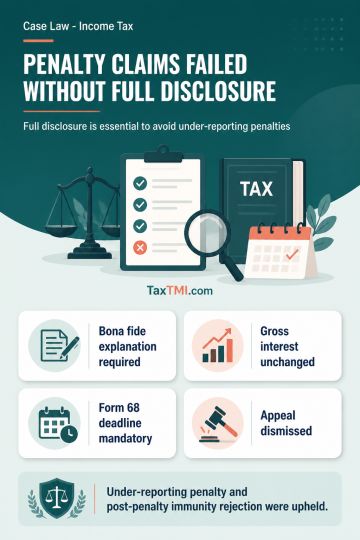
Bona fide disclosure requirements govern under-reporting penalties, and post-penalty immunity applications cannot secure available statutory protectio...
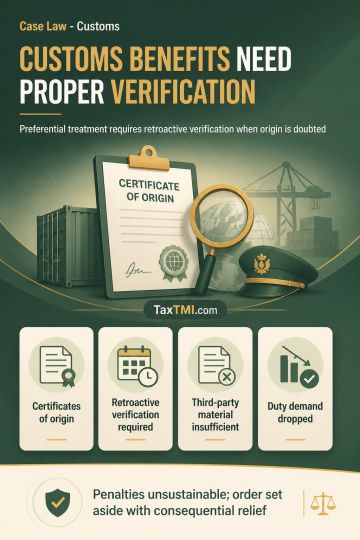
Certificate-of-origin verification procedure governs preferential customs benefits; denial without retroactive verification was set aside with consequ...
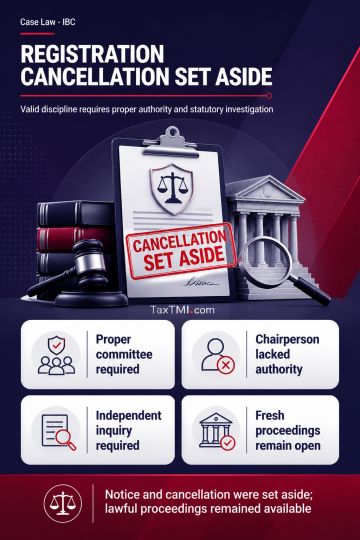
Disciplinary Committee jurisdiction and mandatory investigation requirements invalidated cancellation of an insolvency professional's registration and...
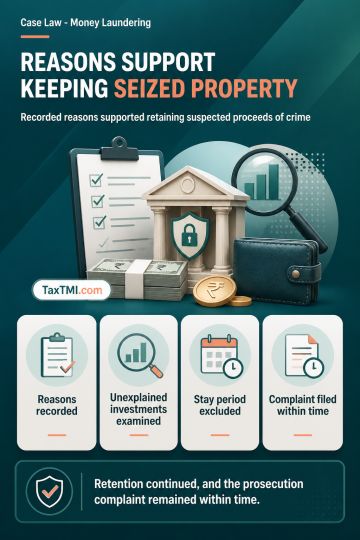
Retention of seized property survives where recorded reasons support proceeds of crime, while stayed investigation periods are excluded from limitatio...
Penalty u/s 271D - Sale of property in cash - meaning of the term “specified sum” - The ITAT examined the definition of "specified sum" under Explanation (iv) to Section 269SS, which pertains to any sum of money receivable, whether as advance or otherwise, in relation to the transfer of an immovable property. It relied on a previous decision by the Co-ordinate Bench of the Tribunal, which held that the provision applies only to advance payments and not to transactions where the final payment is made at the time of registration before the sub-registrar. - The Tribunal noted that the cash received by the assessee was not treated as an advance but as the final payment during the registration of the sale deed. Therefore, it concluded that there was no violation of Section 269SS in the given facts and circumstances.
Penalty u/s 271D - Sale of property in cash - meaning of the term “specified sum” - The ITAT examined the definition of "specified sum" under Explanation (iv) to Section 269SS, which pertains to any sum of money receivable, whether as advance or otherwise, in relation to the transfer of an immovable property. It relied on a previous decision by the Co-ordinate Bench of the Tribunal, which held that the provision applies only to advance payments and not to transactions where the final payment is made at the time of registration before the sub-registrar. - The Tribunal noted that the cash received by the assessee was not treated as an advance but as the final payment during the registration of the sale deed. Therefore, it concluded that there was no violation of Section 269SS in the given facts and circumstances.
Note: It is a system-generated summary and is for quick reference only.
 TaxTMI
 of 4796





 Join Channel


 TaxTMI