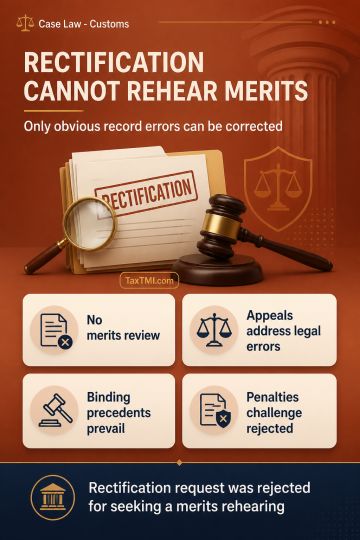
Rectification of mistake remains limited to self-evident record errors, preventing merits review through miscellaneous applications and preserving fin...
Tender creditworthiness conditions may extend to de facto Promoter Directors, with post-participation challenges generally barred absent arbitrariness...
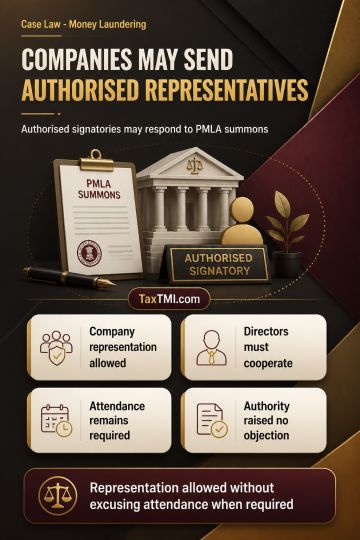
Corporate representation in PMLA summons proceedings permitted through an authorised signatory, subject to directors' continuing cooperation and atten...
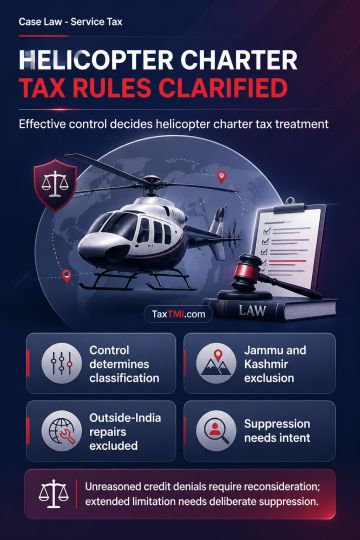
Helicopter charter classification requires effective control analysis, while territorial performance, reasoned credit orders and wilful suppression de...
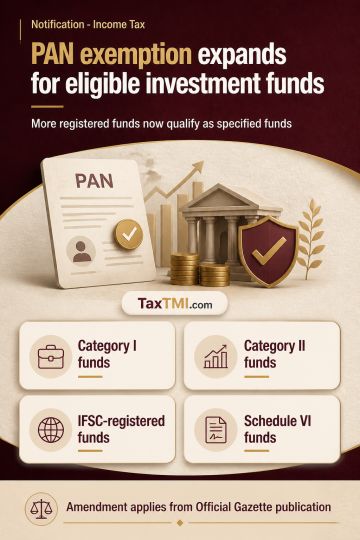
Specified fund definition expands PAN exemption eligibility for registered alternative investment funds and qualifying International Financial Service...
Penalty u/s 271D - Sale of property in cash - meaning of the term “specified sum” - The ITAT examined the definition of "specified sum" under Explanation (iv) to Section 269SS, which pertains to any sum of money receivable, whether as advance or otherwise, in relation to the transfer of an immovable property. It relied on a previous decision by the Co-ordinate Bench of the Tribunal, which held that the provision applies only to advance payments and not to transactions where the final payment is made at the time of registration before the sub-registrar. - The Tribunal noted that the cash received by the assessee was not treated as an advance but as the final payment during the registration of the sale deed. Therefore, it concluded that there was no violation of Section 269SS in the given facts and circumstances.
Penalty u/s 271D - Sale of property in cash - meaning of the term “specified sum” - The ITAT examined the definition of "specified sum" under Explanation (iv) to Section 269SS, which pertains to any sum of money receivable, whether as advance or otherwise, in relation to the transfer of an immovable property. It relied on a previous decision by the Co-ordinate Bench of the Tribunal, which held that the provision applies only to advance payments and not to transactions where the final payment is made at the time of registration before the sub-registrar. - The Tribunal noted that the cash received by the assessee was not treated as an advance but as the final payment during the registration of the sale deed. Therefore, it concluded that there was no violation of Section 269SS in the given facts and circumstances.
Note: It is a system-generated summary and is for quick reference only.
 TaxTMI
 of 4790









 Join Channel


 TaxTMI
