Tax exemption for regulatory authority income applies retrospectively, subject to non-commercial activity, unchanged income sources, and return filing...
Dispute Resolution Panel objections must reach both prescribed forums; otherwise assessment may proceed and statutory appeal remains the proper remedy...
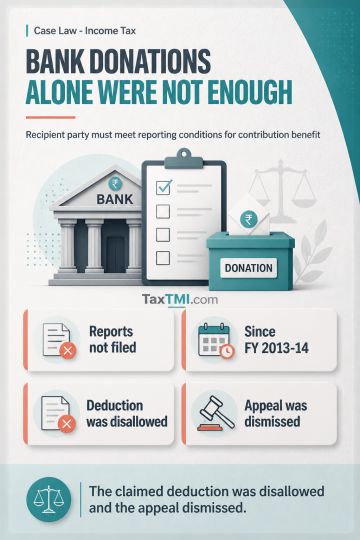
Political contribution deductions require recipient party compliance with contribution-reporting conditions; banking-channel donations alone do not qu...
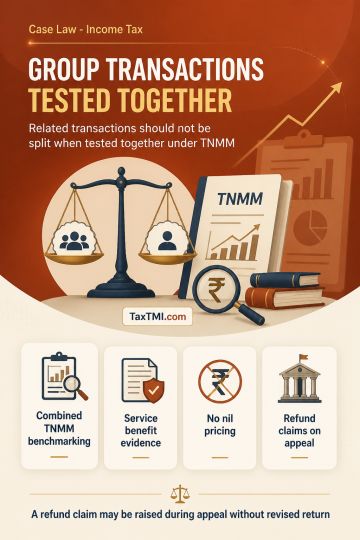
Aggregation under TNMM prevents selective testing of intra-group services without comparable uncontrolled transactions, while appellate additional cla...
Page of 4790
Press 'Enter' after typing page number.
421 to 440 of 95794 Results
❮
❯
❯❯
0 / 200
Expand Note
Add to Folder
No Folders have been created
+
Are you sure you want to delete "My most important" ?
Framing of charges - Owning of assets disproportionate to known sources of income - Prevention of Corruption Act, 1988 - Case against the Additional Chief Architect in New Delhi Municipal Corporation - The Supreme Court held that findings in income tax proceedings, including those by the ITAT, do not have a direct bearing on criminal proceedings under the Prevention of Corruption Act. It stressed that the two processes serve different legal purposes and operate under distinct standards of proof. - The Court clarified that exoneration in a civil adjudication (like income tax proceedings) does not automatically negate the possibility of criminal liability under different statutes, emphasizing the independent nature of criminal proceedings concerning the alleged acquisition of disproportionate assets.
Framing of charges - Owning of assets disproportionate to known sources of income - Prevention of Corruption Act, 1988 - Case against the Additional Chief Architect in New Delhi Municipal Corporation - The Supreme Court held that findings in income tax proceedings, including those by the ITAT, do not have a direct bearing on criminal proceedings under the Prevention of Corruption Act. It stressed that the two processes serve different legal purposes and operate under distinct standards of proof. - The Court clarified that exoneration in a civil adjudication (like income tax proceedings) does not automatically negate the possibility of criminal liability under different statutes, emphasizing the independent nature of criminal proceedings concerning the alleged acquisition of disproportionate assets.
Note: It is a system-generated summary and is for quick reference only.
 TaxTMI
 of 4790









 Join Channel


 TaxTMI