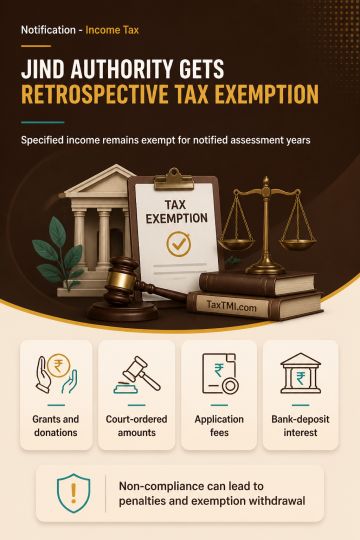
Tax exemption for specified legal-services authority income applies retrospectively, subject to non-commercial activity, unchanged income sources, and...
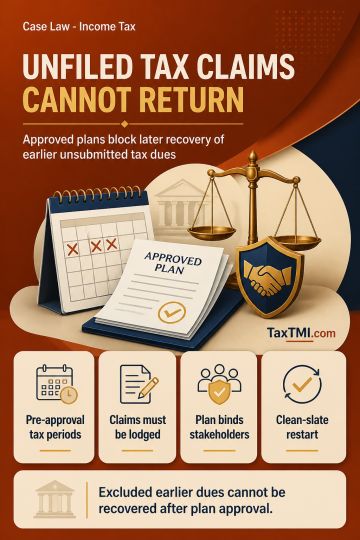
Approved resolution plans extinguish unsubmitted pre-approval tax claims, preventing later recovery outside the insolvency process and preserving a cl...
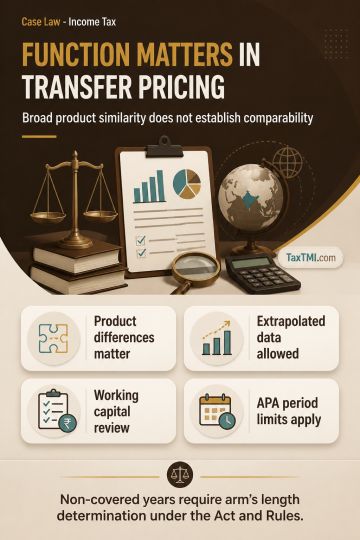
Transfer pricing comparability requires functional alignment and permits working capital adjustment, while APA margins cannot govern non-covered years...
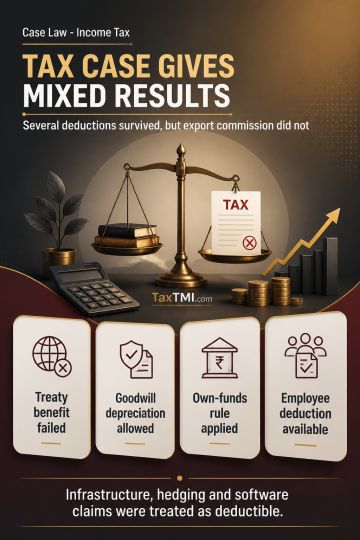
Treaty benefit, goodwill depreciation and hedging costs: export commission disallowed, while key business deductions and depreciation claims succeeded...
Page of 4809
Press 'Enter' after typing page number.
1061 to 1080 of 96174 Results
❮
❯
❯❯
0 / 200
Expand Note
Add to Folder
No Folders have been created
+
Are you sure you want to delete "My most important" ?
Customs Duty concession to EVs imported under of the Ministry of Heavy Industries' Scheme - The introduction of a specific customs duty rate of 15% for EVs imported under the new scheme encourages the import and manufacturing of electric passenger cars in India. This aligns with India's goals for environmental sustainability and the promotion of cleaner, greener transportation alternatives. - The conditional exemption, bound by compliance with the 'Scheme to promote manufacturing of electric passenger cars in India', introduces a structured approach to support the domestic manufacturing of electric vehicles. By setting a deadline of 31st March 2031, it also indicates a transition period towards more sustainable transportation solutions.
Customs Duty concession to EVs imported under of the Ministry of Heavy Industries' Scheme - The introduction of a specific customs duty rate of 15% for EVs imported under the new scheme encourages the import and manufacturing of electric passenger cars in India. This aligns with India's goals for environmental sustainability and the promotion of cleaner, greener transportation alternatives. - The conditional exemption, bound by compliance with the 'Scheme to promote manufacturing of electric passenger cars in India', introduces a structured approach to support the domestic manufacturing of electric vehicles. By setting a deadline of 31st March 2031, it also indicates a transition period towards more sustainable transportation solutions.
Note: It is a system-generated summary and is for quick reference only.
 TaxTMI
  TaxTMI
 of 4809






 Join Channel