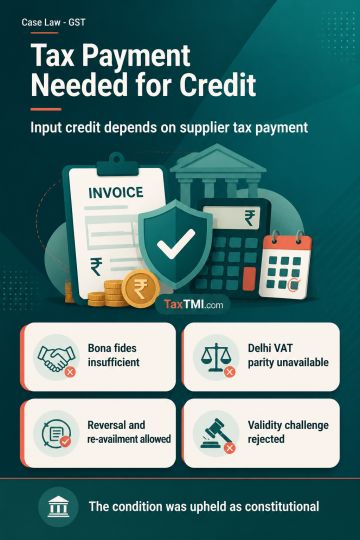
Input tax credit conditions remain constitutionally valid, with eligible recipient claims considered under GST circulars and retrospective filing dead...
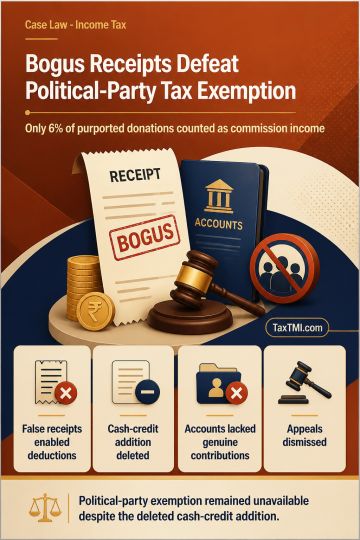
Bogus donation receipts justified commission income assessment and defeated political-party tax exemption for inaccurate accounts and reporting failur...
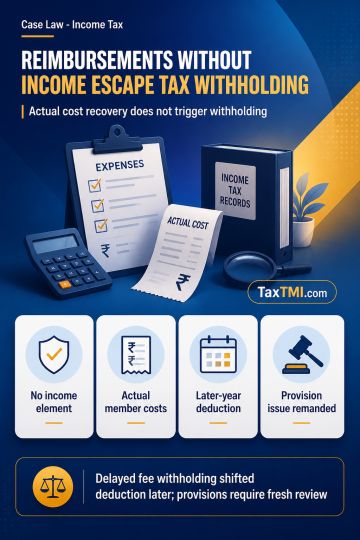
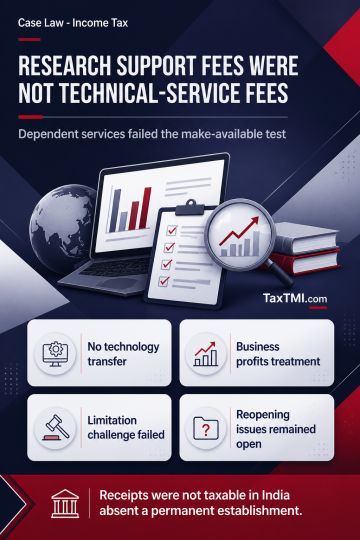
Pure reimbursement without income element escapes tax withholding, while delayed withholding and unsupported provisions face deferred or renewed scrut...
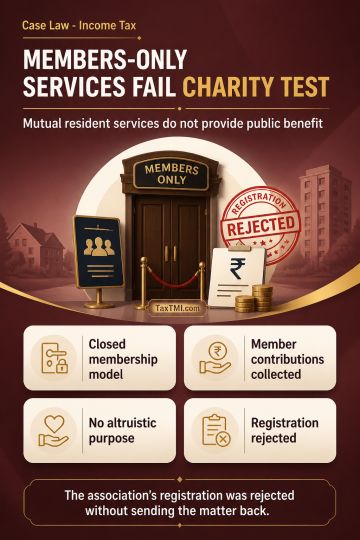
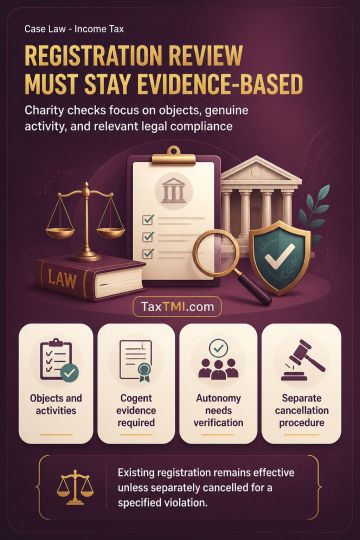
Public benefit requirement defeats charitable registration where residents' association services are reciprocal, member-only facilities governed by mu...
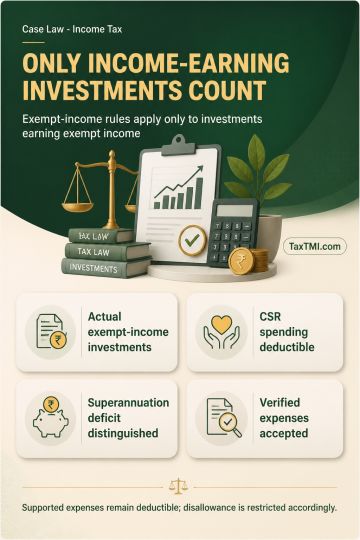
Exempt-income expenditure disallowance is confined to investments that actually generated exempt income, while supported business expenses remain dedu...
Customs Duty concession to EVs imported under of the Ministry of Heavy Industries' Scheme - The introduction of a specific customs duty rate of 15% for EVs imported under the new scheme encourages the import and manufacturing of electric passenger cars in India. This aligns with India's goals for environmental sustainability and the promotion of cleaner, greener transportation alternatives. - The conditional exemption, bound by compliance with the 'Scheme to promote manufacturing of electric passenger cars in India', introduces a structured approach to support the domestic manufacturing of electric vehicles. By setting a deadline of 31st March 2031, it also indicates a transition period towards more sustainable transportation solutions.
Customs Duty concession to EVs imported under of the Ministry of Heavy Industries' Scheme - The introduction of a specific customs duty rate of 15% for EVs imported under the new scheme encourages the import and manufacturing of electric passenger cars in India. This aligns with India's goals for environmental sustainability and the promotion of cleaner, greener transportation alternatives. - The conditional exemption, bound by compliance with the 'Scheme to promote manufacturing of electric passenger cars in India', introduces a structured approach to support the domestic manufacturing of electric vehicles. By setting a deadline of 31st March 2031, it also indicates a transition period towards more sustainable transportation solutions.
Note: It is a system-generated summary and is for quick reference only.
 TaxTMI
 of 4807





 Join Channel


 TaxTMI