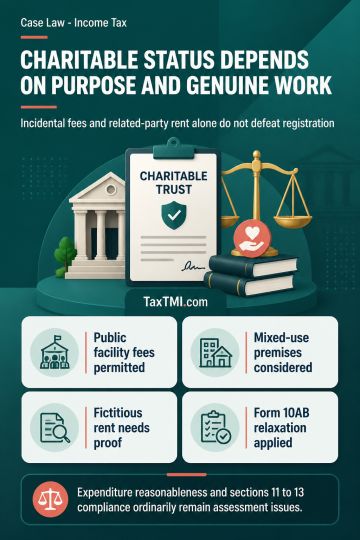
Charitable registration turns on predominant purpose and genuine activities, while incidental fees and related-party rent require supporting adverse m...
MAT book-profit adjustments exclude disallowances for exempt-income expenditure and demerger expenditure unless expressly listed under the statutory c...
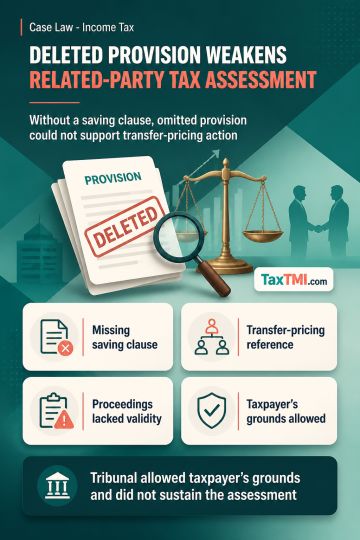
Omitted specified domestic transaction provision invalidates related-party expenditure transfer-pricing references and assessments based on consequent...
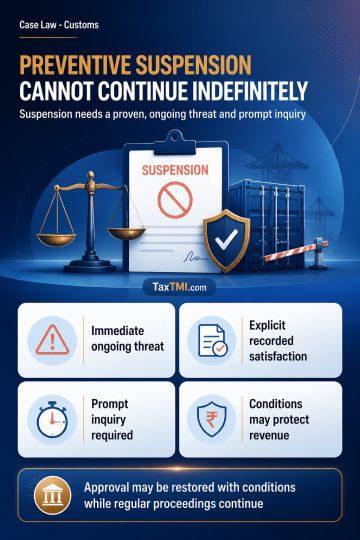
Preventive suspension requires an immediate continuing threat and cannot become indefinite without inquiry, fresh evidence, or proportionate safeguard...
Page of 4805
Press 'Enter' after typing page number.
361 to 380 of 96100 Results
❮
❯
❯❯
0 / 200
Expand Note
Add to Folder
No Folders have been created
+
Are you sure you want to delete "My most important" ?
Customs Duty concession to EVs imported under of the Ministry of Heavy Industries' Scheme - The introduction of a specific customs duty rate of 15% for EVs imported under the new scheme encourages the import and manufacturing of electric passenger cars in India. This aligns with India's goals for environmental sustainability and the promotion of cleaner, greener transportation alternatives. - The conditional exemption, bound by compliance with the 'Scheme to promote manufacturing of electric passenger cars in India', introduces a structured approach to support the domestic manufacturing of electric vehicles. By setting a deadline of 31st March 2031, it also indicates a transition period towards more sustainable transportation solutions.
Customs Duty concession to EVs imported under of the Ministry of Heavy Industries' Scheme - The introduction of a specific customs duty rate of 15% for EVs imported under the new scheme encourages the import and manufacturing of electric passenger cars in India. This aligns with India's goals for environmental sustainability and the promotion of cleaner, greener transportation alternatives. - The conditional exemption, bound by compliance with the 'Scheme to promote manufacturing of electric passenger cars in India', introduces a structured approach to support the domestic manufacturing of electric vehicles. By setting a deadline of 31st March 2031, it also indicates a transition period towards more sustainable transportation solutions.
Note: It is a system-generated summary and is for quick reference only.
 TaxTMI
 of 4805









 Join Channel


 TaxTMI