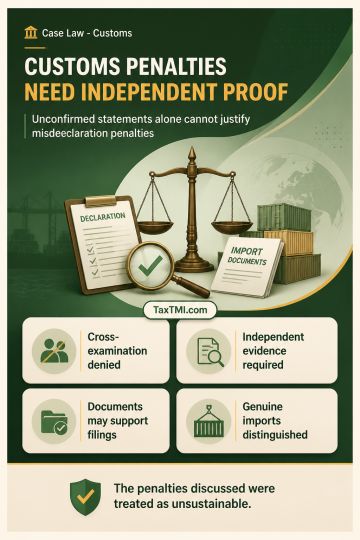
Cross-examination rights and corroborated evidence limit customs penalties for misdeclaration in genuine import transactions involving documented clea...
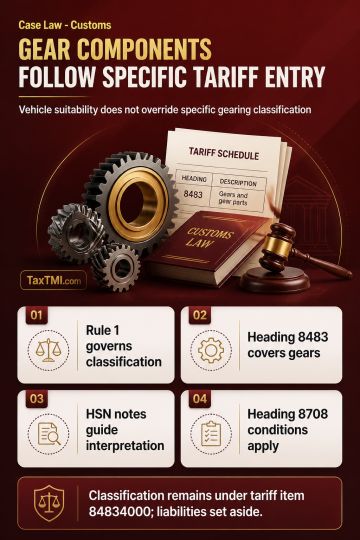
Tariff classification of vehicle gear components follows the specific gearing entry, displacing motor-vehicle parts classification and related liabili...
Necessary-party requirements limit impleadment of independent entities, while deferred consideration does not create an appealable adverse determinati...
Food supplement classification requires common parlance and authoritative tests, preventing treatment as proprietary Ayurvedic medicines without suppo...
Specified regulatory authority income receives conditional tax exemption, subject to non-commercial activity, unchanged income character, and return f...
Tax exemption for regulatory authority income applies retrospectively, subject to non-commercial activity, unchanged income sources, and return-filing...
Demand of GST - Validity of assessment orders - The petitioner contended that they provided all relevant documents, including those related to land transactions, during the assessment process. They argued that project details were submitted during rectification proceedings. - After examining the evidence and submissions, the court noted that the assessing officer had considered the petitioner's documents and entered findings based on such evidence. The court concluded that a reasonable opportunity was provided to the petitioner, and the assessment orders were not a result of non-application of mind. Therefore, the court found no grounds for interference in its discretionary jurisdiction.
Demand of GST - Validity of assessment orders - The petitioner contended that they provided all relevant documents, including those related to land transactions, during the assessment process. They argued that project details were submitted during rectification proceedings. - After examining the evidence and submissions, the court noted that the assessing officer had considered the petitioner's documents and entered findings based on such evidence. The court concluded that a reasonable opportunity was provided to the petitioner, and the assessment orders were not a result of non-application of mind. Therefore, the court found no grounds for interference in its discretionary jurisdiction.
Note: It is a system-generated summary and is for quick reference only.
 TaxTMI
  TaxTMI
 of 4809



















 Join Channel