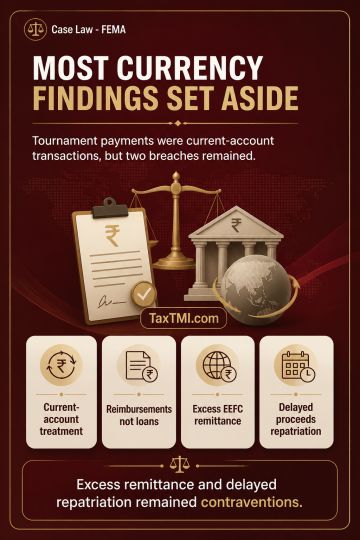
Current account treatment of overseas tournament services removed most FEMA findings, but excess EEFC remittance and delayed repatriation remained bre...
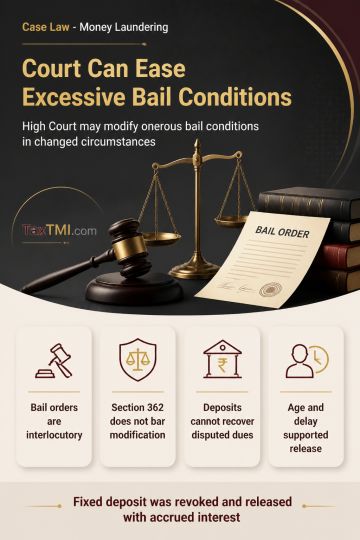
Modification of bail conditions remains available through inherent jurisdiction where onerous deposits undermine justice and cannot recover disputed d...
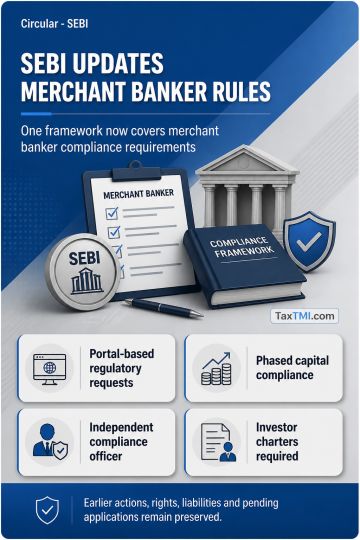
Merchant banker regulation consolidates registration, governance, capital, reporting, outsourcing and investor-protection requirements under an update...
Seeking waiving off the payment of Court fees - economic hardship or other significant reasons - Refiling the Compensation Application against the order of the Competition Commission of India - The NCLAT found no such hardship or reason was presented that justified waiving the fee, despite the appellant's claim of being misled by their previous representative. - The NCLAT distinguished these cases from the present situation, noting that in those cases, the legal representatives' absence or default led to the proceedings' outcomes. In contrast, in the current case, the representative was present and actively participated, even though he was not authorized to practice law. Thus, the rationale of not penalizing the party for the representative's fault did not apply here as the representative's actions were not mere defaults or absences but involved active, albeit unauthorized, participation.
Seeking waiving off the payment of Court fees - economic hardship or other significant reasons - Refiling the Compensation Application against the order of the Competition Commission of India - The NCLAT found no such hardship or reason was presented that justified waiving the fee, despite the appellant's claim of being misled by their previous representative. - The NCLAT distinguished these cases from the present situation, noting that in those cases, the legal representatives' absence or default led to the proceedings' outcomes. In contrast, in the current case, the representative was present and actively participated, even though he was not authorized to practice law. Thus, the rationale of not penalizing the party for the representative's fault did not apply here as the representative's actions were not mere defaults or absences but involved active, albeit unauthorized, participation.
Note: It is a system-generated summary and is for quick reference only.
 TaxTMI
  TaxTMI
 of 4817





 Join Channel