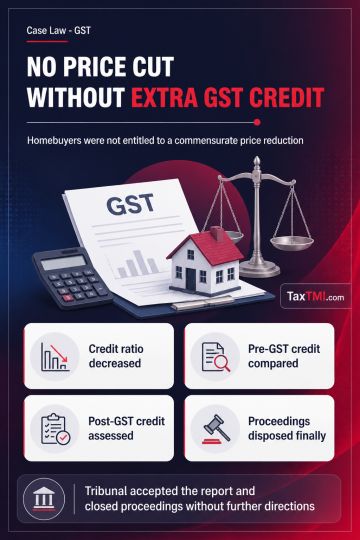
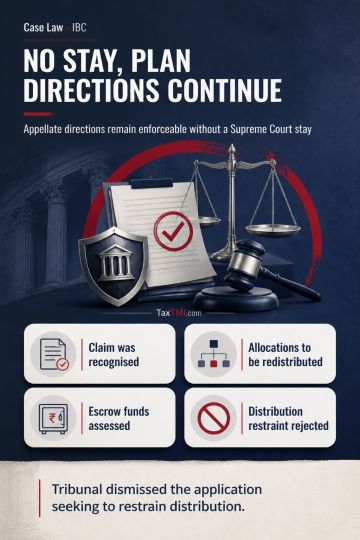
Enforcement of resolution-plan directions continues without a Supreme Court stay, preventing suspension of redistribution and escrowed-fund distributi...
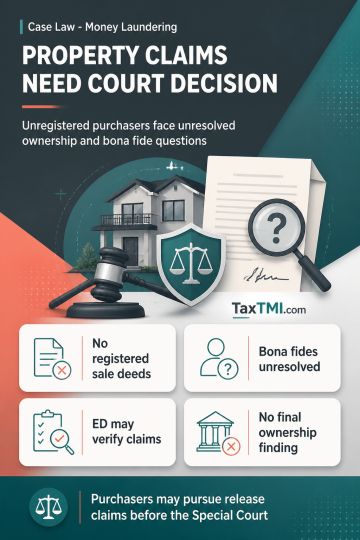
Third-party ownership claims over attached property require Special Court adjudication where purchasers lack registered sale deeds and bona fides rema...
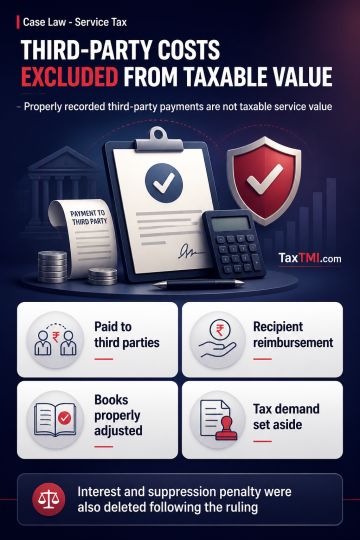
Pure-agent reimbursements in clearing and forwarding services are excluded from taxable value when qualifying third-party payments are properly record...
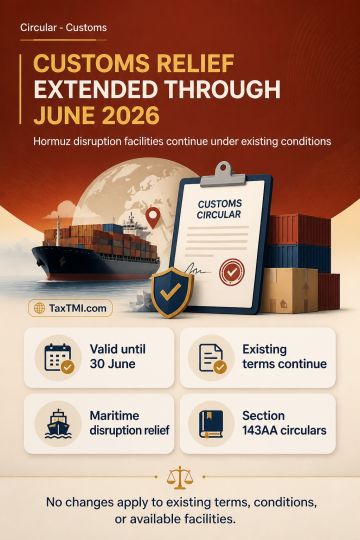
Customs relief for Strait of Hormuz maritime disruptions remains available, with existing conditions continuing unchanged through the extended validit...
Seeking waiving off the payment of Court fees - economic hardship or other significant reasons - Refiling the Compensation Application against the order of the Competition Commission of India - The NCLAT found no such hardship or reason was presented that justified waiving the fee, despite the appellant's claim of being misled by their previous representative. - The NCLAT distinguished these cases from the present situation, noting that in those cases, the legal representatives' absence or default led to the proceedings' outcomes. In contrast, in the current case, the representative was present and actively participated, even though he was not authorized to practice law. Thus, the rationale of not penalizing the party for the representative's fault did not apply here as the representative's actions were not mere defaults or absences but involved active, albeit unauthorized, participation.
Seeking waiving off the payment of Court fees - economic hardship or other significant reasons - Refiling the Compensation Application against the order of the Competition Commission of India - The NCLAT found no such hardship or reason was presented that justified waiving the fee, despite the appellant's claim of being misled by their previous representative. - The NCLAT distinguished these cases from the present situation, noting that in those cases, the legal representatives' absence or default led to the proceedings' outcomes. In contrast, in the current case, the representative was present and actively participated, even though he was not authorized to practice law. Thus, the rationale of not penalizing the party for the representative's fault did not apply here as the representative's actions were not mere defaults or absences but involved active, albeit unauthorized, participation.
Note: It is a system-generated summary and is for quick reference only.
 TaxTMI
  TaxTMI
 of 4816




 Join Channel