TNMM functional comparability requires excluding rice manufacturers from a pure Basmati rice trader's benchmark and recognising operating export recei...
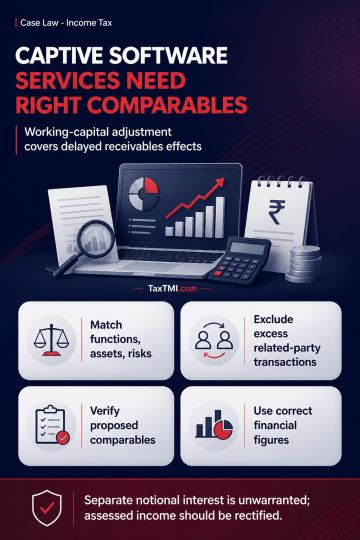
Working-capital adjustment subsumes delayed-receivable effects in TNMM benchmarking of captive software-development services, avoiding separate notion...
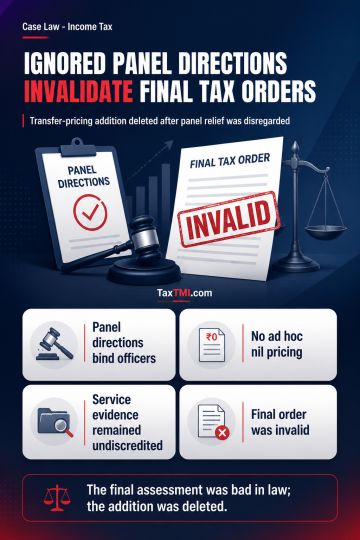
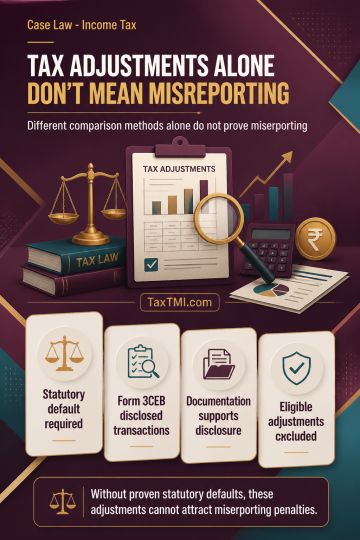
Transfer-pricing comparability requires exclusion of financially illogical super-profit comparables and correction of unsupported annual-report and ma...
Charitable character assessment preserves Section 80G approval despite inclusive spiritual teachings and incidental religious expenditure within the s...
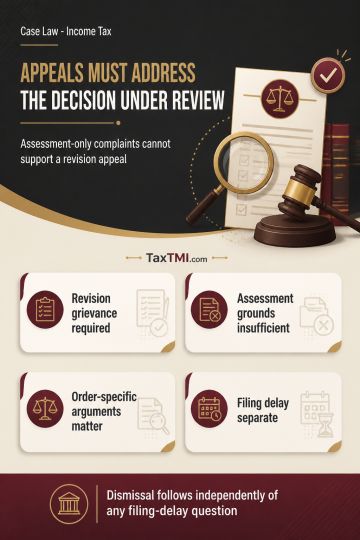
Penalty proceedings for cash-loan acceptance require assessment proceedings and recorded Assessing Officer satisfaction; absent these, the proceedings...
Functional comparability governs software-service benchmarking: dissimilar companies are excluded, while related-party filters, margins and working-ca...
Insolvency and BankruptcyMarch 16, 2024Case LawsAT
Seeking condonation delay of 41 days in filing the present appeal - Sufficient reasons for delay or not - initiation of CIRP - Despite the appellant's claim of lack of awareness, the NCLAT noted evidence provided by the respondent showing that the appellant was informed of the impugned order through various means, including emails and representation by their advocate. Therefore, the NCLAT rejected the appellant's contention of lack of awareness. - The NCLAT emphasized that the limitation period for filing an appeal under the IBC starts from the date of the order and not from the date the appellant becomes aware of the order. The Tribunal also rejected the appellant's request to exclude certain days while calculating the limitation period, stating that such exclusions were not justified under the IBC.
Seeking condonation delay of 41 days in filing the present appeal - Sufficient reasons for delay or not - initiation of CIRP - Despite the appellant's claim of lack of awareness, the NCLAT noted evidence provided by the respondent showing that the appellant was informed of the impugned order through various means, including emails and representation by their advocate. Therefore, the NCLAT rejected the appellant's contention of lack of awareness. - The NCLAT emphasized that the limitation period for filing an appeal under the IBC starts from the date of the order and not from the date the appellant becomes aware of the order. The Tribunal also rejected the appellant's request to exclude certain days while calculating the limitation period, stating that such exclusions were not justified under the IBC.
Note: It is a system-generated summary and is for quick reference only.
 TaxTMI
  TaxTMI
 of 4830















 Join Channel


