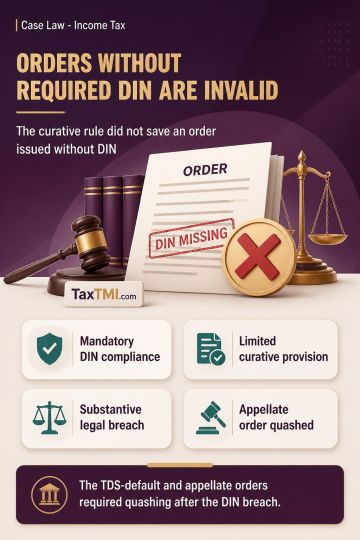
Document Identification Number compliance renders TDS-default orders invalid where mandatory DIN requirements are breached and curative provision does...
Levy of GST - transmission or distribution of electricity services provided by them is exempt from GST - various charges collected along with network/wheeling charges, cross subsidy surcharge and additional charges - This case clarifies the GST implications for various charges collected by electricity distribution licensees. While the distribution of electricity itself is exempt from GST, ancillary services that do not form an integral part of this distribution may be subject to GST. This distinction is crucial for electricity distribution companies to accurately classify their services and apply the correct GST rates. The ruling underscores the importance of distinguishing between the principal supply and ancillary services in the context of GST legislation.
Levy of GST - transmission or distribution of electricity services provided by them is exempt from GST - various charges collected along with network/wheeling charges, cross subsidy surcharge and additional charges - This case clarifies the GST implications for various charges collected by electricity distribution licensees. While the distribution of electricity itself is exempt from GST, ancillary services that do not form an integral part of this distribution may be subject to GST. This distinction is crucial for electricity distribution companies to accurately classify their services and apply the correct GST rates. The ruling underscores the importance of distinguishing between the principal supply and ancillary services in the context of GST legislation.
Note: It is a system-generated summary and is for quick reference only.
 TaxTMI
  TaxTMI
 of 4918