Original works exemption excludes standalone boulder transportation, leaving subcontracted railway-project transport services subject to service tax l...
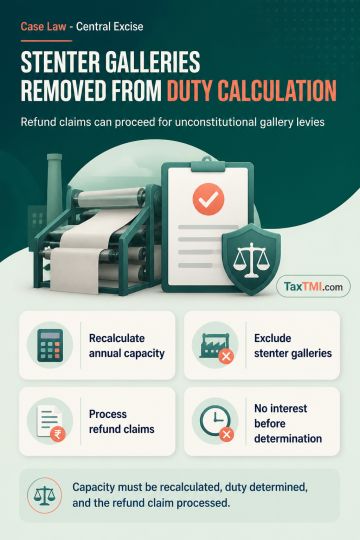
Annual production capacity determinations excluding stenter galleries support refunds for unconstitutional excise levies without an unjust-enrichment ...
Vicarious liability for cheque dishonour requires specific allegations of responsibility and cheque signatory; generic director allegations cannot sus...
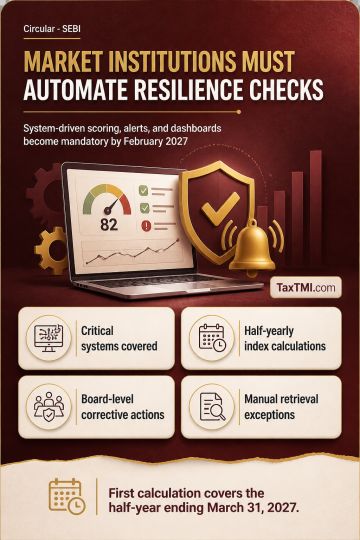
IT Resilience Index requires market infrastructure institutions to automate resilience scoring, early warnings, and continuous service-delivery monito...
Wilful misdeclaration or suppression of facts - benefit of Merchandise Export from India Scheme (MEIS) - Export of various frozen seafood - exporting goods as ‘Frozen Leather Jacket Fish’ - The Tribunal noted that the appellant's classification of the product under the contested HSN code was based on a legitimate interpretation and that the customs had accepted this classification at the time of export. The reclassification by the department after issuing a Public Notice could not retroactively invalidate the appellant's eligibility for MEIS benefits. - The Tribunal also addressed the legal validity of the MEIS scrips obtained based on the exports under dispute, concluding that if the scrips were deemed valid for the importers, they must also be considered valid for the exporter (the appellant).
Wilful misdeclaration or suppression of facts - benefit of Merchandise Export from India Scheme (MEIS) - Export of various frozen seafood - exporting goods as ‘Frozen Leather Jacket Fish’ - The Tribunal noted that the appellant's classification of the product under the contested HSN code was based on a legitimate interpretation and that the customs had accepted this classification at the time of export. The reclassification by the department after issuing a Public Notice could not retroactively invalidate the appellant's eligibility for MEIS benefits. - The Tribunal also addressed the legal validity of the MEIS scrips obtained based on the exports under dispute, concluding that if the scrips were deemed valid for the importers, they must also be considered valid for the exporter (the appellant).
Note: It is a system-generated summary and is for quick reference only.
 TaxTMI
  TaxTMI
 of 4830







 Join Channel


