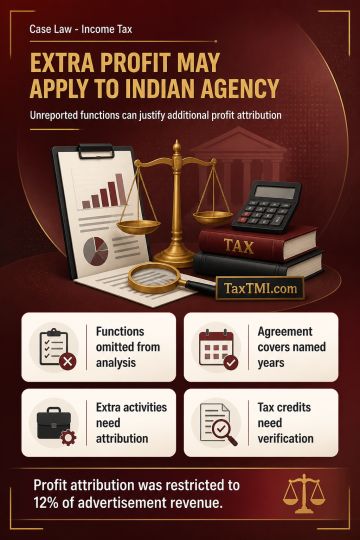
Pure-agent exclusion fails where hotel booking facilitators receive third-party services themselves, making entire customer consideration taxable as r...
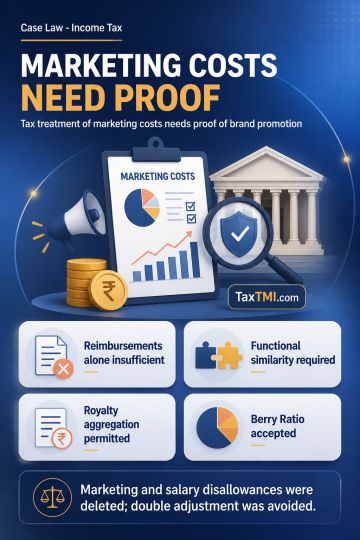
Transfer pricing requires evidence for AMP transactions, functionally reliable comparables, and appropriate aggregation or Berry Ratio benchmarking me...
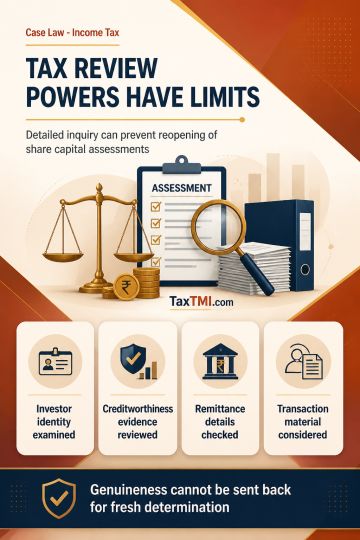
Revisionary jurisdiction cannot reopen share capital assessments where adequate inquiry supports a permissible view and no independent error is establ...
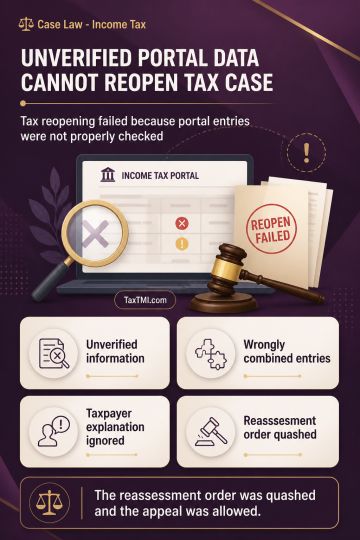
Reassessment jurisdiction fails where unverified portal information is aggregated without examining the taxpayer's explanation or relevance of entries...
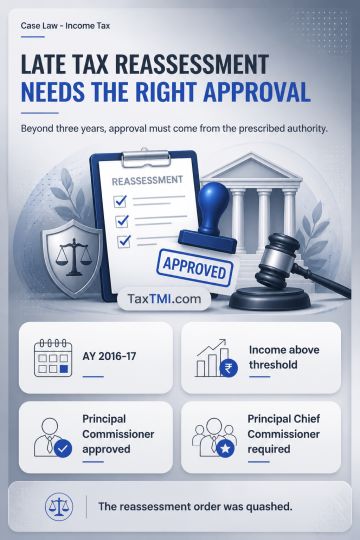
Statutory sanction for delayed reassessment requires approval from the prescribed authority; approval by an inferior authority invalidates jurisdictio...
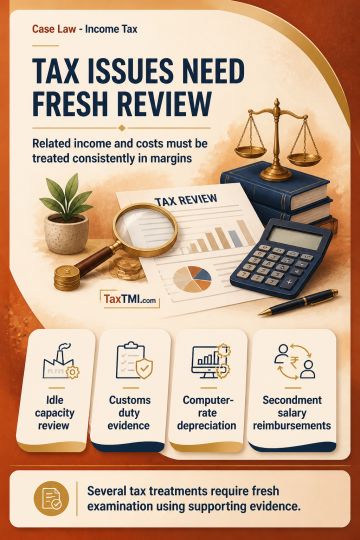
Transfer pricing margin adjustments require matching treatment of non-operating income and related costs, with comparability issues reconsidered on ev...
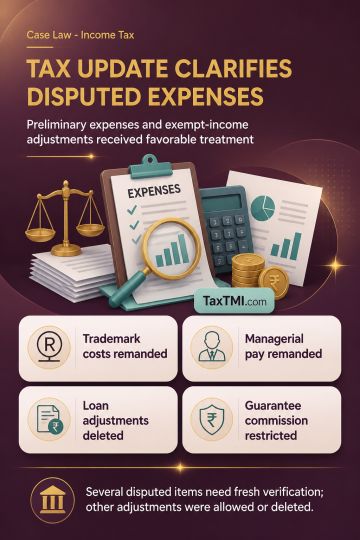
Preliminary-expense amortisation and MAT exempt-income adjustments prevailed, while trademark costs and managerial remuneration require fresh verifica...
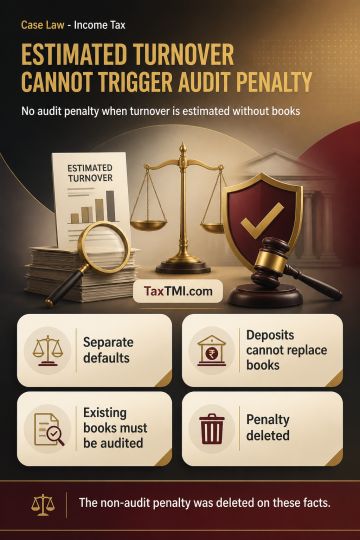
Export valuation requires contemporaneous evidence; unrelated invoices cannot prove overvaluation, and dual penalties on firm and partner are impermis...
Page of 4824
Press 'Enter' after typing page number.
601 to 620 of 96463 Results
❮
❯
❯❯
0 / 200
Expand Note
Add to Folder
No Folders have been created
+
Are you sure you want to delete "My most important" ?
Scope of rectification of mistake - The case revolved around the disallowance of EPF and ESI contributions by the Assessing Officer u/s 154 of the Income-tax Act, 1961. The key contention was whether the AO was justified in exercising rectification powers under Section 154 due to conflicting judgments and the absence of a clear error apparent on record. The Appellate Tribunal ruled in favor of the assessee, holding that the AO's action was not justified as the issue was debatable and there was no clear error evident at the time of the original assessment.
Scope of rectification of mistake - The case revolved around the disallowance of EPF and ESI contributions by the Assessing Officer u/s 154 of the Income-tax Act, 1961. The key contention was whether the AO was justified in exercising rectification powers under Section 154 due to conflicting judgments and the absence of a clear error apparent on record. The Appellate Tribunal ruled in favor of the assessee, holding that the AO's action was not justified as the issue was debatable and there was no clear error evident at the time of the original assessment.
Note: It is a system-generated summary and is for quick reference only.
 TaxTMI
  TaxTMI
 of 4824










 Join Channel