Donor-directed corpus contributions retain capital character despite exemption claims under section 10(23C)(vi), preventing their treatment as taxable...
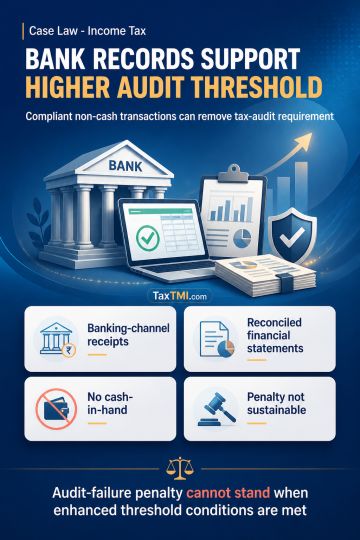
Enhanced tax-audit threshold applies where banking records establish compliant non-cash receipts and payments, eliminating penalty exposure for audit ...
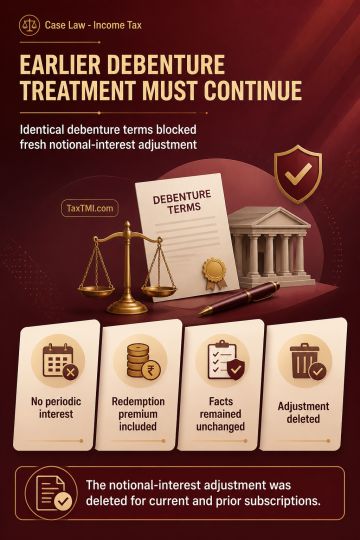
Transfer pricing consistency protects identical non-interest-bearing debenture terms from a later notional-interest adjustment without valid statutory...
Rectification of debatable deduction claims cannot reverse scrutiny-approved co-operative society interest income deductions as apparent record errors...
Cash-method accounting bars presumptive interest taxation, while unsupported securities and share-trading additions require reliable material and veri...
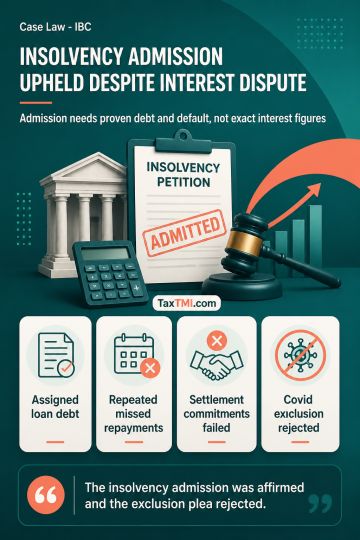
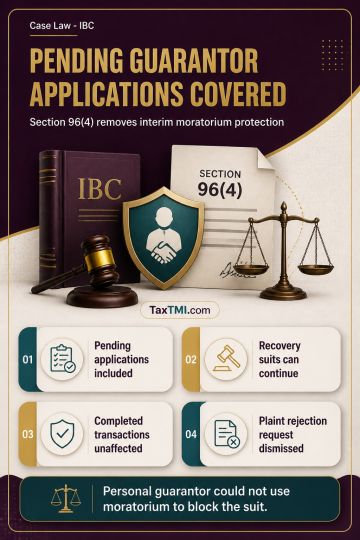
Section 7 admission requires established financial debt and default, not precise interest quantification, while post-suspension defaults remain action...
Page of 4821
Press 'Enter' after typing page number.
341 to 360 of 96408 Results
❮
❯
❯❯
0 / 200
Expand Note
Add to Folder
No Folders have been created
+
Are you sure you want to delete "My most important" ?
Scope of rectification of mistake - The case revolved around the disallowance of EPF and ESI contributions by the Assessing Officer u/s 154 of the Income-tax Act, 1961. The key contention was whether the AO was justified in exercising rectification powers under Section 154 due to conflicting judgments and the absence of a clear error apparent on record. The Appellate Tribunal ruled in favor of the assessee, holding that the AO's action was not justified as the issue was debatable and there was no clear error evident at the time of the original assessment.
Scope of rectification of mistake - The case revolved around the disallowance of EPF and ESI contributions by the Assessing Officer u/s 154 of the Income-tax Act, 1961. The key contention was whether the AO was justified in exercising rectification powers under Section 154 due to conflicting judgments and the absence of a clear error apparent on record. The Appellate Tribunal ruled in favor of the assessee, holding that the AO's action was not justified as the issue was debatable and there was no clear error evident at the time of the original assessment.
Note: It is a system-generated summary and is for quick reference only.
 TaxTMI
  TaxTMI
 of 4821

















 Join Channel