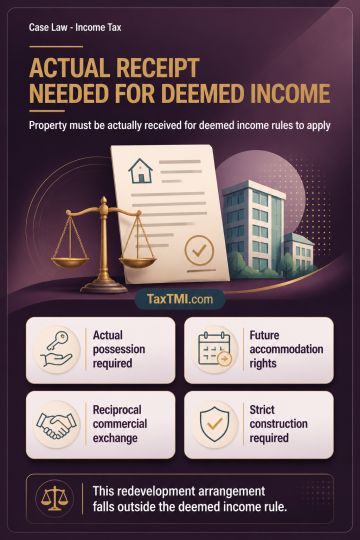
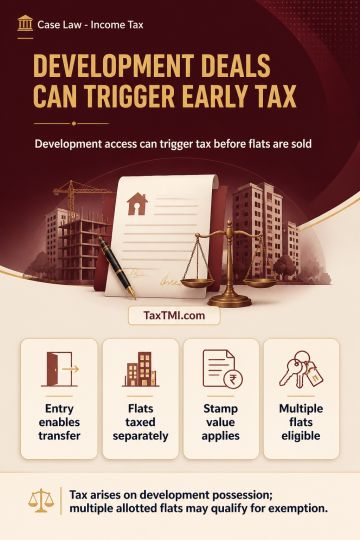
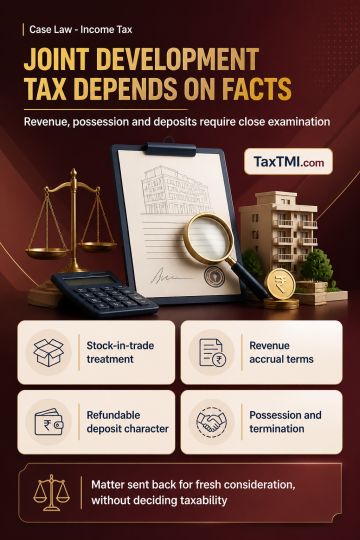
Receipt of immovable property requires actual possession or enjoyment; redevelopment allotments exchanged for tenancy rights fall outside deemed incom...
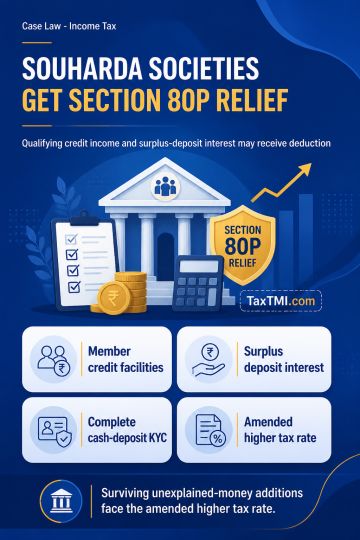
Section 80P deduction covers Souharda credit societies, including qualifying surplus-deposit interest, subject to member KYC verification for cash dep...
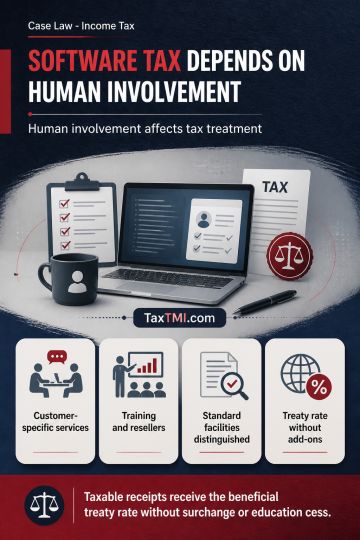
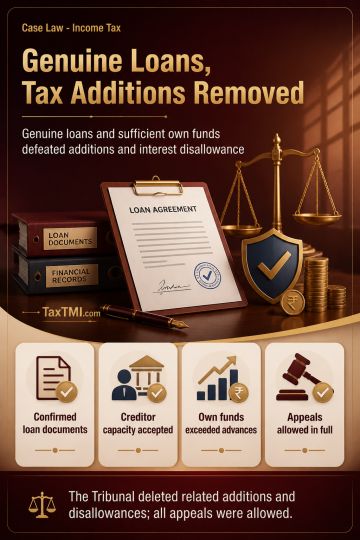
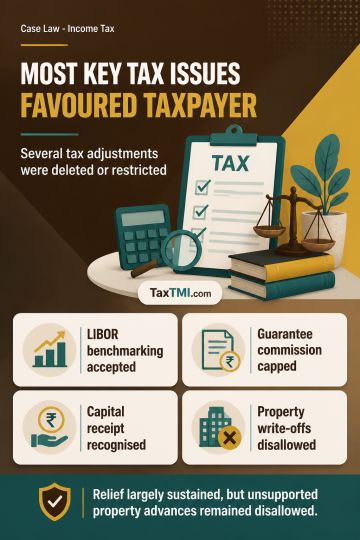
Transfer-pricing benchmarking and capital-receipt principles sustained taxpayer relief, while unsupported property-advance write-offs remained disallo...
Determining the tax and penalty - Vehicle transporting consignment without Original Tax Invoice - The High court analyzed the relevant provisions of the SGST Act and CGST Act. While Rule 138-A and Section 68 were cited by the respondents, the court noted that neither of these provisions explicitly requires the transporter to carry the Original Tax Invoice. Instead, the court emphasized Rule 48 of the CGST Act, which specifies the preparation of the invoice in triplicate. The original copy is meant for the recipient/purchaser, while the duplicate copy is for the transporter. The High court concluded that the transporter is not obligated to carry the Original Tax Invoice, as claimed by the respondents. - As a result, the court allowed the writ petition, quashed the orders imposing tax and penalty. Excess amount paid directed to be refunded.
Determining the tax and penalty - Vehicle transporting consignment without Original Tax Invoice - The High court analyzed the relevant provisions of the SGST Act and CGST Act. While Rule 138-A and Section 68 were cited by the respondents, the court noted that neither of these provisions explicitly requires the transporter to carry the Original Tax Invoice. Instead, the court emphasized Rule 48 of the CGST Act, which specifies the preparation of the invoice in triplicate. The original copy is meant for the recipient/purchaser, while the duplicate copy is for the transporter. The High court concluded that the transporter is not obligated to carry the Original Tax Invoice, as claimed by the respondents. - As a result, the court allowed the writ petition, quashed the orders imposing tax and penalty. Excess amount paid directed to be refunded.
Note: It is a system-generated summary and is for quick reference only.
 TaxTMI
 of 4805



 Join Channel


 TaxTMI
