Approved resolution plans extinguish unsubmitted pre-approval tax claims, preventing later recovery outside the insolvency process and preserving a cl...
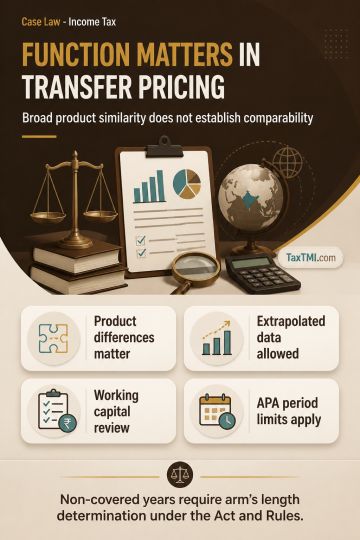
Transfer pricing comparability requires functional alignment and permits working capital adjustment, while APA margins cannot govern non-covered years...
Treaty benefit, goodwill depreciation and hedging costs: export commission disallowed, while key business deductions and depreciation claims succeeded...
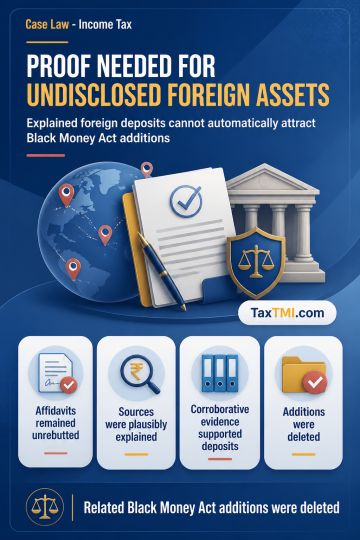
Undisclosed foreign asset classification requires an unexplained source; unrebutted affidavits and corroborative evidence defeated the Black Money Act...
Sustainability of supplementary Show Cause Notice, prior to insertion of second proviso to Section 124 of the Customs Act, 1962 w.e.f 29.03.2018 - The High Court observed that prior to the insertion of the second proviso to Section 124 of the Customs Act, the authority to issue supplementary show cause notices was implicit and inbuilt in the act. The second proviso, added in 2018, was declaratory of the existing law, suggesting its retrospective application. - The court concluded that the supplementary show cause notice issued on 18.05.2017, despite being termed "supplementary," should be treated as an independent notice due to the emergence of new facts during the investigation. - The court decided in favor of the appellant (Revenue), setting aside the order of the tribunal and restoring the order of the adjudicating authority.
Sustainability of supplementary Show Cause Notice, prior to insertion of second proviso to Section 124 of the Customs Act, 1962 w.e.f 29.03.2018 - The High Court observed that prior to the insertion of the second proviso to Section 124 of the Customs Act, the authority to issue supplementary show cause notices was implicit and inbuilt in the act. The second proviso, added in 2018, was declaratory of the existing law, suggesting its retrospective application. - The court concluded that the supplementary show cause notice issued on 18.05.2017, despite being termed "supplementary," should be treated as an independent notice due to the emergence of new facts during the investigation. - The court decided in favor of the appellant (Revenue), setting aside the order of the tribunal and restoring the order of the adjudicating authority.
Note: It is a system-generated summary and is for quick reference only.
 TaxTMI
 of 4803









 Join Channel


 TaxTMI