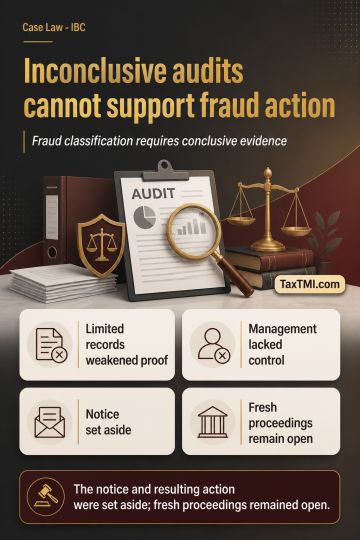
Fraud classification show-cause notices founded on inconclusive forensic audit material cannot sustain action, permitting fresh proceedings on conclus...
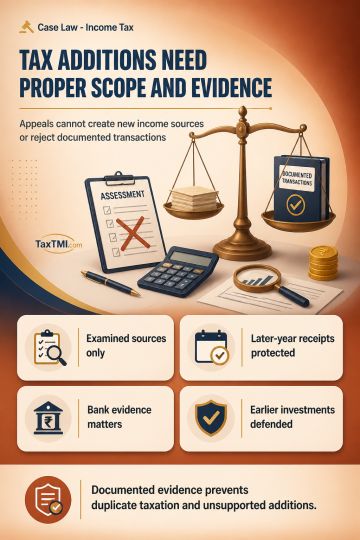
Appellate enhancement limits protect against new income sources, while documented credits and prior-year investments resist unexplained-income additio...
Liability to pay interest on the goods cleared to their sister unit in terms of proviso to Rule 9 read with Rule 8 of the Valuation Rules, 2000 - The appellant calculated the cost of production based on annual cost audit reports and compared it with CAS-4 certificates to pay differential duty. They also raised supplementary invoices for duty differences.The department demanded interest on the differential duty paid by the appellant, threatening coercive measures. - The appellant's method of duty payment, based on cost audit reports and CAS-4 certificates, was deemed compliant with the law. The Tribunal ruled that interest is not payable in revenue-neutral situations and set aside the department's demand for interest.
Liability to pay interest on the goods cleared to their sister unit in terms of proviso to Rule 9 read with Rule 8 of the Valuation Rules, 2000 - The appellant calculated the cost of production based on annual cost audit reports and compared it with CAS-4 certificates to pay differential duty. They also raised supplementary invoices for duty differences.The department demanded interest on the differential duty paid by the appellant, threatening coercive measures. - The appellant's method of duty payment, based on cost audit reports and CAS-4 certificates, was deemed compliant with the law. The Tribunal ruled that interest is not payable in revenue-neutral situations and set aside the department's demand for interest.
Note: It is a system-generated summary and is for quick reference only.
 TaxTMI
  TaxTMI
 of 4881