Prolonged sterilisation of development rights supports capital-gains treatment, while business-income disallowances cannot govern capital-gains comput...
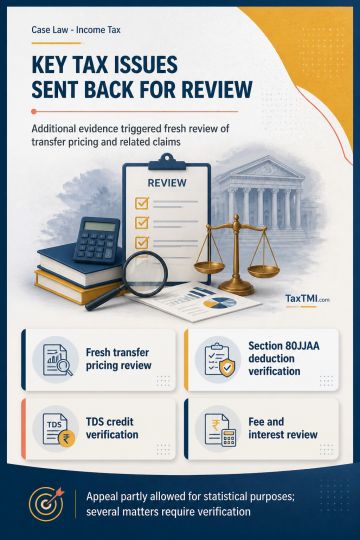
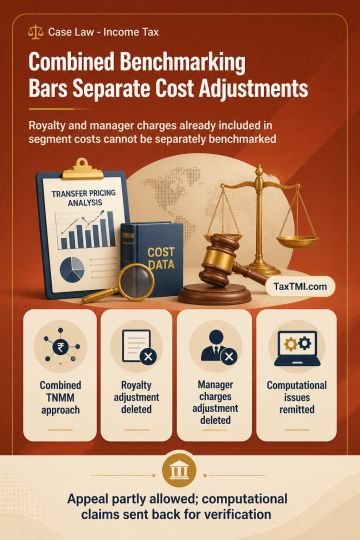
Additional evidence in transfer pricing dispute leads to fresh examination, while tax deductions, TDS credit, fee and refund interest require verifica...
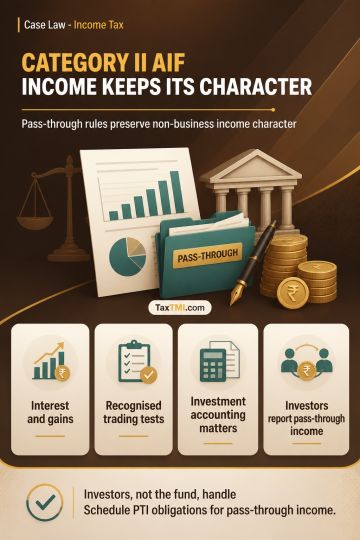
Category II AIF pass-through taxation preserves non-business income character; investment receipts cannot be reclassified without applying recognised ...
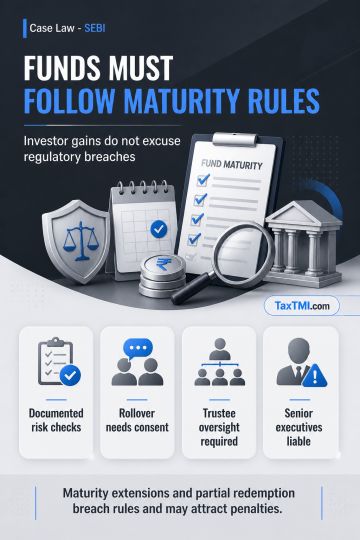
Mutual fund maturity rules require proper rollover, redemption, disclosure, and due diligence; investor gains cannot excuse regulatory breaches or pen...
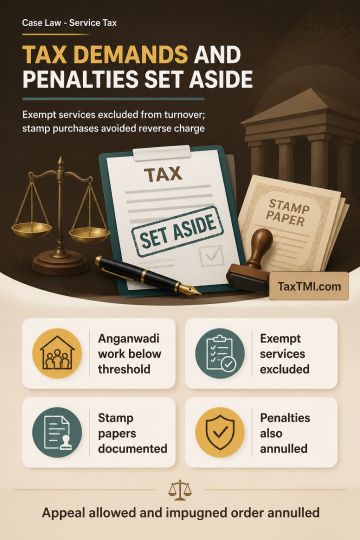
Threshold exemption excludes exempt services, while stamp-paper purchases avoid reverse charge; consequential service tax penalties were also set asid...
Method of communication of notice - The High Court examined the provisions of Section 282(1) of the Income Tax Act, 1961 and Rule 127(1) of the Income Tax Rules, 1962 regarding the method and manner of service of notice. - The Court concluded that communication of notice electronically should adhere strictly to the prescribed methods and does not include presumptive notification by placing it on the e-portal. - The Court ruled in favor of the petitioner, stating that they were not given a fair opportunity to respond to the proceedings under Section 12A(1)(ac)(iii) of the Act of 1961.
Method of communication of notice - The High Court examined the provisions of Section 282(1) of the Income Tax Act, 1961 and Rule 127(1) of the Income Tax Rules, 1962 regarding the method and manner of service of notice. - The Court concluded that communication of notice electronically should adhere strictly to the prescribed methods and does not include presumptive notification by placing it on the e-portal. - The Court ruled in favor of the petitioner, stating that they were not given a fair opportunity to respond to the proceedings under Section 12A(1)(ac)(iii) of the Act of 1961.
Note: It is a system-generated summary and is for quick reference only.
 TaxTMI
 of 4792








 Join Channel


 TaxTMI
