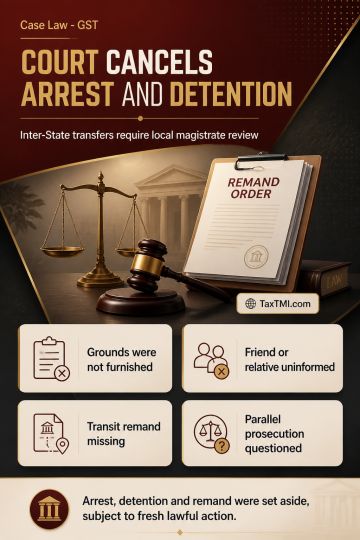
Arrest safeguards and transit remand requirements invalidated detention following inter-State transfer without communicated grounds or magistrate auth...
Arrest safeguards require disclosed grounds, relative intimation and transit remand, while duplicate prosecution under the CGST framework is unsustain...
Document Identification Number defects can invalidate GST assessments, with delayed challenges entertained conditionally where patent irregularities e...
Windmill commissioning evidence supported higher depreciation where grid connection and electricity generation proved operational use before the relev...
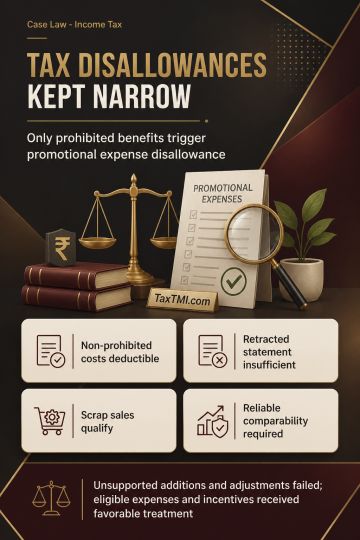
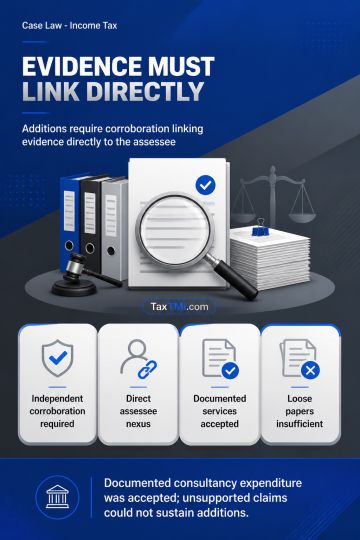
Pharmaceutical promotion and transfer-pricing comparability principles limited disallowances, while uncorroborated search allegations and unsupported ...
Method of communication of notice - The High Court examined the provisions of Section 282(1) of the Income Tax Act, 1961 and Rule 127(1) of the Income Tax Rules, 1962 regarding the method and manner of service of notice. - The Court concluded that communication of notice electronically should adhere strictly to the prescribed methods and does not include presumptive notification by placing it on the e-portal. - The Court ruled in favor of the petitioner, stating that they were not given a fair opportunity to respond to the proceedings under Section 12A(1)(ac)(iii) of the Act of 1961.
Method of communication of notice - The High Court examined the provisions of Section 282(1) of the Income Tax Act, 1961 and Rule 127(1) of the Income Tax Rules, 1962 regarding the method and manner of service of notice. - The Court concluded that communication of notice electronically should adhere strictly to the prescribed methods and does not include presumptive notification by placing it on the e-portal. - The Court ruled in favor of the petitioner, stating that they were not given a fair opportunity to respond to the proceedings under Section 12A(1)(ac)(iii) of the Act of 1961.
Note: It is a system-generated summary and is for quick reference only.
 TaxTMI
 of 4782















 Join Channel


 TaxTMI
