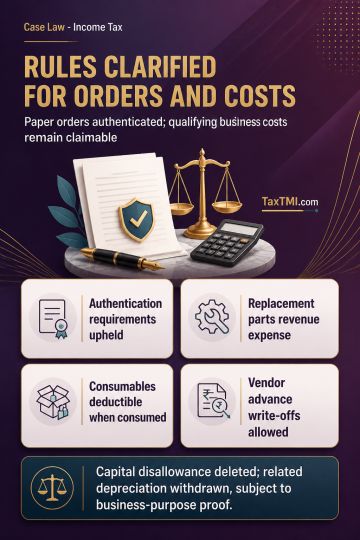
Authentication of paper assessment orders upheld, while qualifying repairs, consumables and vendor advance write-offs remain deductible business claim...
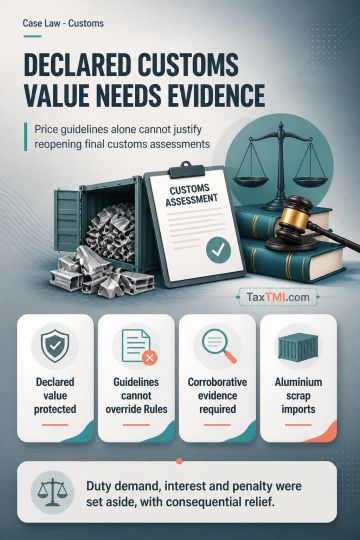
Transaction value cannot be rejected solely on non-statutory valuation guidelines without corroborative evidence supporting reassessment of final cust...
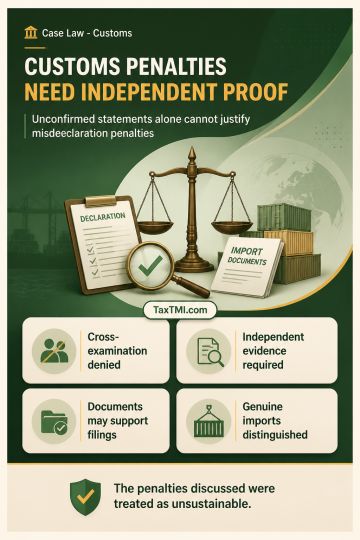
Cross-examination rights and corroborated evidence limit customs penalties for misdeclaration in genuine import transactions involving documented clea...
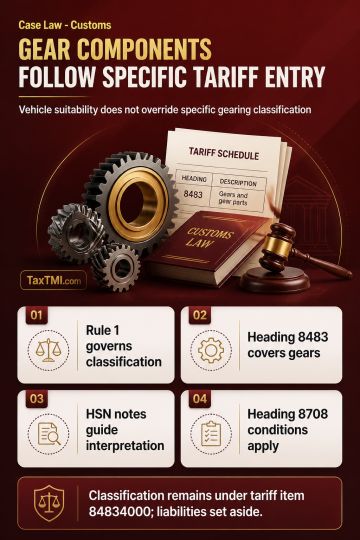
Tariff classification of vehicle gear components follows the specific gearing entry, displacing motor-vehicle parts classification and related liabili...
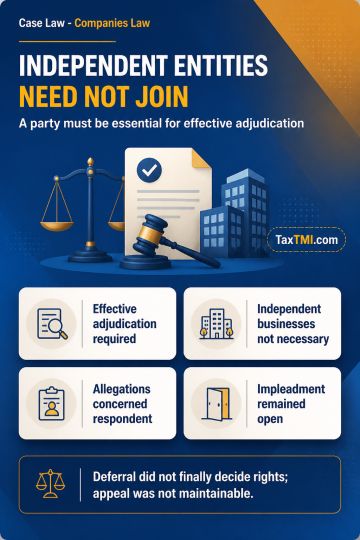
Necessary-party requirements limit impleadment of independent entities, while deferred consideration does not create an appealable adverse determinati...
Misclassification and Wrongful Claim of MEIS Benefits - Exports of quilts containing cotton/polyester - Levy of penalties - The CESTAT found the appellant guilty of willful misdeclaration and misclassification to avail higher MEIS benefits, violating the provisions of the Customs Act, 1962, and Foreign Trade (Development & Regulation) Act, 1992. - The Tribunal upheld the principle of self-assessment and confirmed that M/s FA's actions constituted a deliberate contravention of customs laws, making them liable for penalties. - While penalties were justified for the firm due to the deliberate misclassification, the penalties against the individual managers were revoked, acknowledging their passive role in following the firm's instructions without evidence of personal gain or active connivance.
Misclassification and Wrongful Claim of MEIS Benefits - Exports of quilts containing cotton/polyester - Levy of penalties - The CESTAT found the appellant guilty of willful misdeclaration and misclassification to avail higher MEIS benefits, violating the provisions of the Customs Act, 1962, and Foreign Trade (Development & Regulation) Act, 1992. - The Tribunal upheld the principle of self-assessment and confirmed that M/s FA's actions constituted a deliberate contravention of customs laws, making them liable for penalties. - While penalties were justified for the firm due to the deliberate misclassification, the penalties against the individual managers were revoked, acknowledging their passive role in following the firm's instructions without evidence of personal gain or active connivance.
Note: It is a system-generated summary and is for quick reference only.
 TaxTMI
 of 4803








 Join Channel


 TaxTMI
