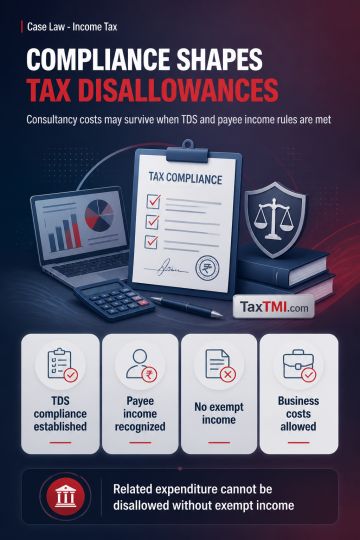
Tax deduction compliance and payee income recognition govern consultancy disallowance, while no exempt income prevents related expenditure disallowanc...
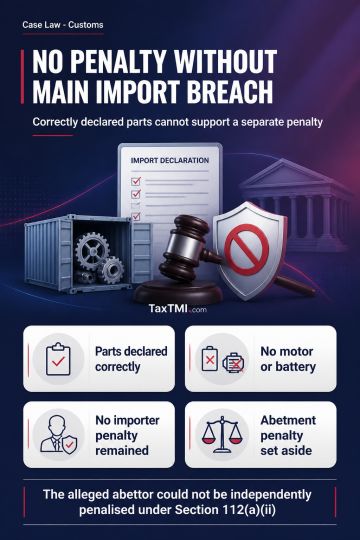
Derivative abetment liability fails when correctly declared imported components establish no underlying improper importation by the principal importer...
Tax exemption for regulatory authority income applies retrospectively, subject to non-commercial activity, unchanged income sources, and return filing...
Page of 4805
Press 'Enter' after typing page number.
701 to 720 of 96092 Results
❮
❯
❯❯
0 / 200
Expand Note
Add to Folder
No Folders have been created
+
Are you sure you want to delete "My most important" ?
Disciplinary proceedings - allegation of misconduct - Proceedings against ex-Superintendent of Central Excise - Reliance on confessional statements made by accused persons during the investigation - The High court underscored that disciplinary proceedings require evidence that meets legal principles, and reliance on confessional statements from a separate criminal investigation fails to satisfy this criterion. - It was concluded that the punishment orders were based on improper grounds, as the disciplinary actions were not supported by evidence that could logically prove the charges against the employees according to principles applicable to departmental inquiries. Thus, the punishment orders and the appellate decisions affirming them were quashed, and the employees were entitled to consequential benefits.
Disciplinary proceedings - allegation of misconduct - Proceedings against ex-Superintendent of Central Excise - Reliance on confessional statements made by accused persons during the investigation - The High court underscored that disciplinary proceedings require evidence that meets legal principles, and reliance on confessional statements from a separate criminal investigation fails to satisfy this criterion. - It was concluded that the punishment orders were based on improper grounds, as the disciplinary actions were not supported by evidence that could logically prove the charges against the employees according to principles applicable to departmental inquiries. Thus, the punishment orders and the appellate decisions affirming them were quashed, and the employees were entitled to consequential benefits.
Note: It is a system-generated summary and is for quick reference only.
 TaxTMI
 of 4805













 Join Channel


 TaxTMI
