Transaction value rejection requires reliable corroboration; refundable VAT is excluded and temporary registration does not defeat new-vehicle exempti...
Appellate jurisdiction remains available where a wrist-worn gold ornament cannot conclusively be characterised as imported baggage at the preliminary ...
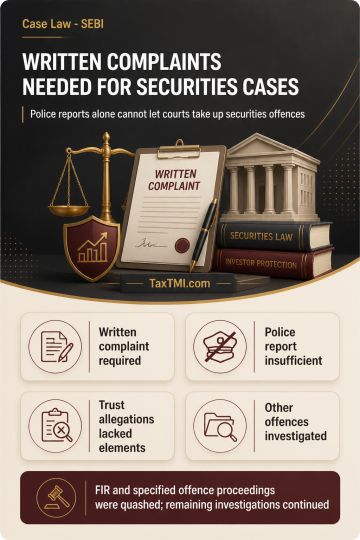
Written complaint requirement bars cognizance on police reports for securities offences, while unsupported breach of trust and cheating allegations fa...
Page of 4801
Press 'Enter' after typing page number.
341 to 360 of 96001 Results
❮
❯
❯❯
0 / 200
Expand Note
Add to Folder
No Folders have been created
+
Are you sure you want to delete "My most important" ?
Disciplinary proceedings - allegation of misconduct - Proceedings against ex-Superintendent of Central Excise - Reliance on confessional statements made by accused persons during the investigation - The High court underscored that disciplinary proceedings require evidence that meets legal principles, and reliance on confessional statements from a separate criminal investigation fails to satisfy this criterion. - It was concluded that the punishment orders were based on improper grounds, as the disciplinary actions were not supported by evidence that could logically prove the charges against the employees according to principles applicable to departmental inquiries. Thus, the punishment orders and the appellate decisions affirming them were quashed, and the employees were entitled to consequential benefits.
Disciplinary proceedings - allegation of misconduct - Proceedings against ex-Superintendent of Central Excise - Reliance on confessional statements made by accused persons during the investigation - The High court underscored that disciplinary proceedings require evidence that meets legal principles, and reliance on confessional statements from a separate criminal investigation fails to satisfy this criterion. - It was concluded that the punishment orders were based on improper grounds, as the disciplinary actions were not supported by evidence that could logically prove the charges against the employees according to principles applicable to departmental inquiries. Thus, the punishment orders and the appellate decisions affirming them were quashed, and the employees were entitled to consequential benefits.
Note: It is a system-generated summary and is for quick reference only.
 TaxTMI
 of 4801














 Join Channel


 TaxTMI