Jurisdictional facts in certificate-of-origin discrepancies can support customs show-cause proceedings, leaving factual explanations for departmental ...
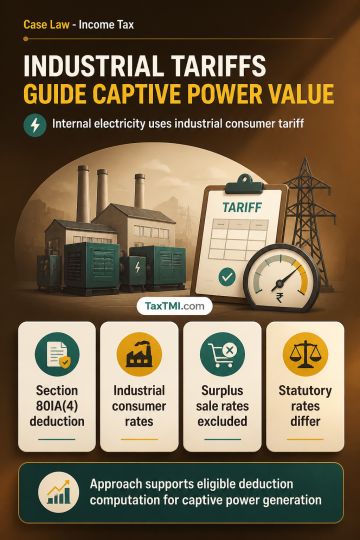
Market value for captive electricity consumption follows industrial consumer tariffs, supporting profit computation for the power generation deduction...
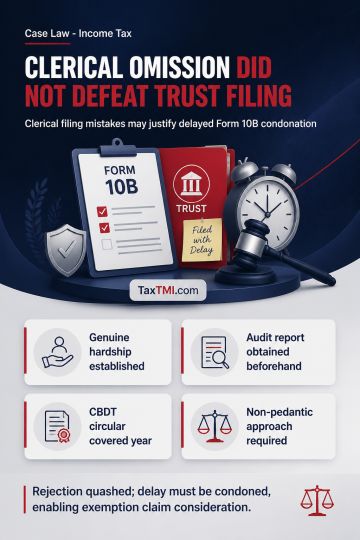
The CBDT has issued a circular which addresses conditions under which income from specific funds, trusts, institutions, universities, educational, or medical institutions can enjoy tax exemption under the Income-tax Act, 1961. It outlines that at least 85% of such entities' income must be used for charitable or religious purposes, directly or through donations to similar entities. Amendments by the Finance Act 2023 clarify that only 85% of eligible donations are considered for charitable or religious application, with the balance 15% not needing to be invested per section 11(5) for exemption eligibility.
The CBDT has issued a circular which addresses conditions under which income from specific funds, trusts, institutions, universities, educational, or medical institutions can enjoy tax exemption under the Income-tax Act, 1961. It outlines that at least 85% of such entities' income must be used for charitable or religious purposes, directly or through donations to similar entities. Amendments by the Finance Act 2023 clarify that only 85% of eligible donations are considered for charitable or religious application, with the balance 15% not needing to be invested per section 11(5) for exemption eligibility.
Note: It is a system-generated summary and is for quick reference only.
 TaxTMI
 of 4805








 Join Channel


 TaxTMI