Windmill commissioning evidence supported higher depreciation where grid connection and electricity generation proved operational use before the relev...
Pharmaceutical promotion and transfer-pricing comparability principles limited disallowances, while uncorroborated search allegations and unsupported ...
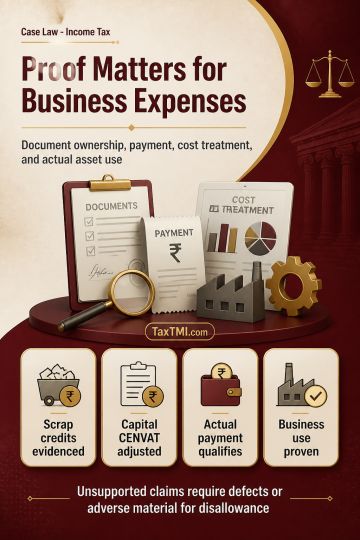
Business expenditure substantiation supports scrap credits, statutory payments and expense claims, while depreciation requires proof of actual busines...
The CBDT has issued a circular which addresses conditions under which income from specific funds, trusts, institutions, universities, educational, or medical institutions can enjoy tax exemption under the Income-tax Act, 1961. It outlines that at least 85% of such entities' income must be used for charitable or religious purposes, directly or through donations to similar entities. Amendments by the Finance Act 2023 clarify that only 85% of eligible donations are considered for charitable or religious application, with the balance 15% not needing to be invested per section 11(5) for exemption eligibility.
The CBDT has issued a circular which addresses conditions under which income from specific funds, trusts, institutions, universities, educational, or medical institutions can enjoy tax exemption under the Income-tax Act, 1961. It outlines that at least 85% of such entities' income must be used for charitable or religious purposes, directly or through donations to similar entities. Amendments by the Finance Act 2023 clarify that only 85% of eligible donations are considered for charitable or religious application, with the balance 15% not needing to be invested per section 11(5) for exemption eligibility.
Note: It is a system-generated summary and is for quick reference only.
 TaxTMI
 of 4803












 Join Channel


 TaxTMI
