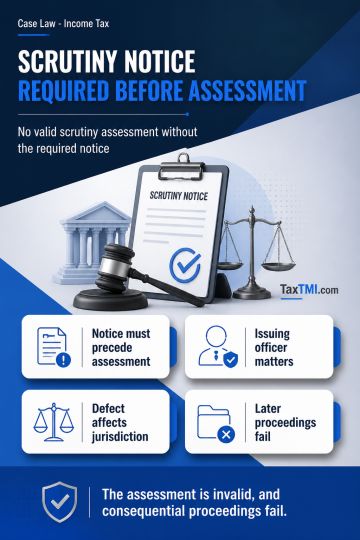
Overlapping GST proceedings require Central and State authorities to designate one competent authority for coordinated adjudication of the same matter...
Composite healthcare supplies retain exemption when patient care is the contract's essential character, despite payment through an implementing agency...
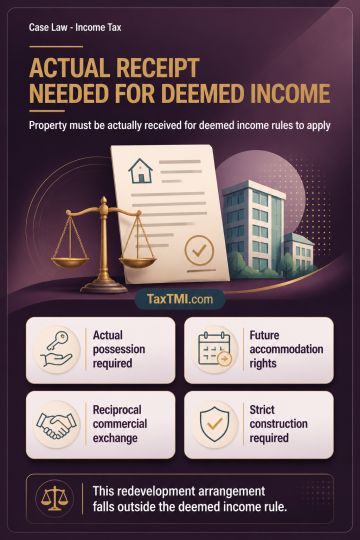
Receipt of immovable property requires actual possession or enjoyment; redevelopment allotments exchanged for tenancy rights fall outside deemed incom...
Section 80P deduction covers Souharda credit societies, including qualifying surplus-deposit interest, subject to member KYC verification for cash dep...
Unexplained credits u/s. 68 - cash claimed to have been received by the assessee from recovery of farmers' advances earlier granted - onus to prove - The ITAT upheld the CIT(A)'s decision, finding that the assessee, a corporate entity engaged in sugar manufacturing, had regularly advanced money to sugarcane farmers to secure raw materials. These advances, reflected in the financial statements as 'receivables', were substantiated by the assessee through various documents and submissions during the assessment proceedings. - The ITAT found no basis to classify these deposits as unexplained under Section 68 or Section 69A of the Act. The tribunal emphasized that the AO's addition constituted a double addition for the same amount in two different assessment years, which was unjustified.
Unexplained credits u/s. 68 - cash claimed to have been received by the assessee from recovery of farmers' advances earlier granted - onus to prove - The ITAT upheld the CIT(A)'s decision, finding that the assessee, a corporate entity engaged in sugar manufacturing, had regularly advanced money to sugarcane farmers to secure raw materials. These advances, reflected in the financial statements as 'receivables', were substantiated by the assessee through various documents and submissions during the assessment proceedings. - The ITAT found no basis to classify these deposits as unexplained under Section 68 or Section 69A of the Act. The tribunal emphasized that the AO's addition constituted a double addition for the same amount in two different assessment years, which was unjustified.
Note: It is a system-generated summary and is for quick reference only.
 TaxTMI
 of 4803


















 Join Channel


 TaxTMI