Agency in CNG distribution makes outlet operators commission agents, rendering taxable Business Auxiliary Service rather than purchasing goods for res...
Composite inpatient healthcare supply may retain exemption despite MRP medicine billing, while separate taxable sale characterisation remains disputed...
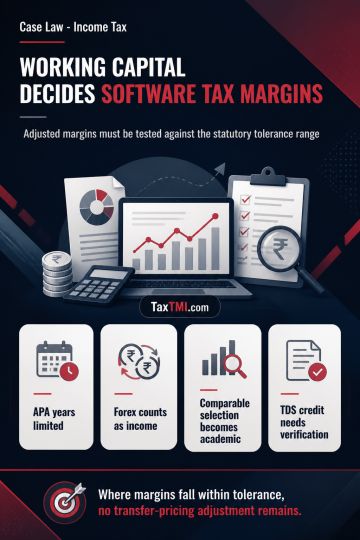
Working-capital adjustment determines whether software-services transfer-pricing margins fall within the statutory tolerance range, eliminating any ad...
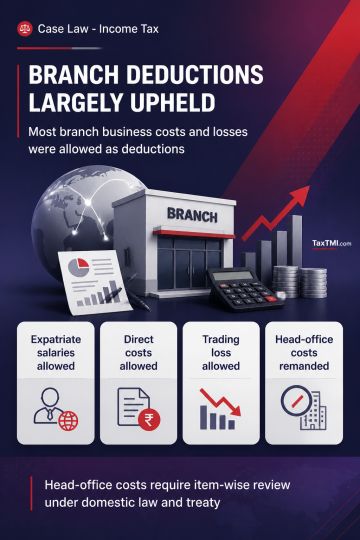
Permanent establishment deductions upheld for expatriate salaries, direct costs and trading losses, while head-office costs require fresh classificati...
Unexplained credits u/s. 68 - cash claimed to have been received by the assessee from recovery of farmers' advances earlier granted - onus to prove - The ITAT upheld the CIT(A)'s decision, finding that the assessee, a corporate entity engaged in sugar manufacturing, had regularly advanced money to sugarcane farmers to secure raw materials. These advances, reflected in the financial statements as 'receivables', were substantiated by the assessee through various documents and submissions during the assessment proceedings. - The ITAT found no basis to classify these deposits as unexplained under Section 68 or Section 69A of the Act. The tribunal emphasized that the AO's addition constituted a double addition for the same amount in two different assessment years, which was unjustified.
Unexplained credits u/s. 68 - cash claimed to have been received by the assessee from recovery of farmers' advances earlier granted - onus to prove - The ITAT upheld the CIT(A)'s decision, finding that the assessee, a corporate entity engaged in sugar manufacturing, had regularly advanced money to sugarcane farmers to secure raw materials. These advances, reflected in the financial statements as 'receivables', were substantiated by the assessee through various documents and submissions during the assessment proceedings. - The ITAT found no basis to classify these deposits as unexplained under Section 68 or Section 69A of the Act. The tribunal emphasized that the AO's addition constituted a double addition for the same amount in two different assessment years, which was unjustified.
Note: It is a system-generated summary and is for quick reference only.
 TaxTMI
 of 4798













 Join Channel


 TaxTMI
