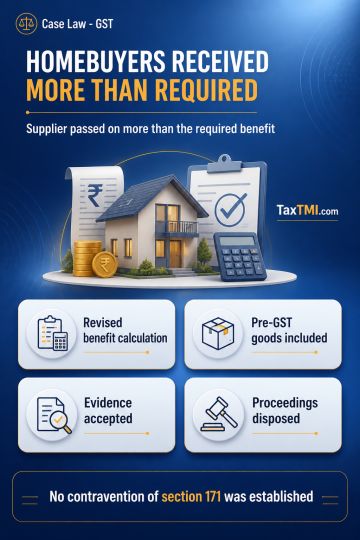
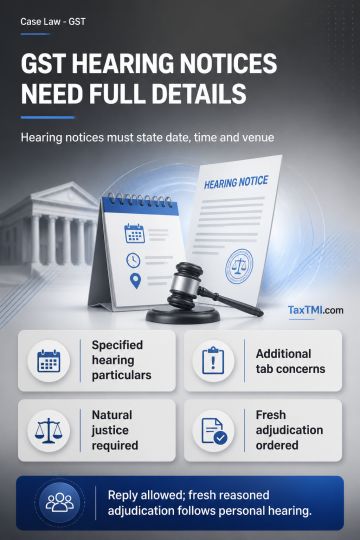
Necessary-party requirements limit impleadment of independent entities, while deferred consideration does not create an appealable adverse determinati...
Food supplement classification requires common parlance and authoritative tests, preventing treatment as proprietary Ayurvedic medicines without suppo...
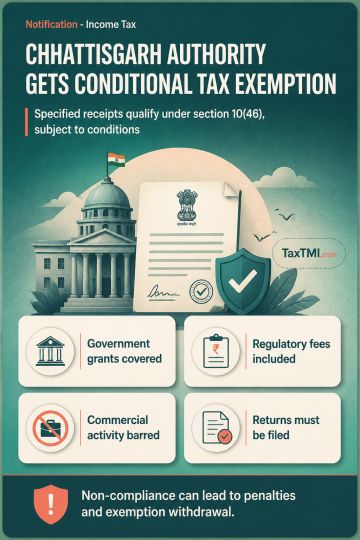
Specified regulatory authority income receives conditional tax exemption, subject to non-commercial activity, unchanged income character, and return f...
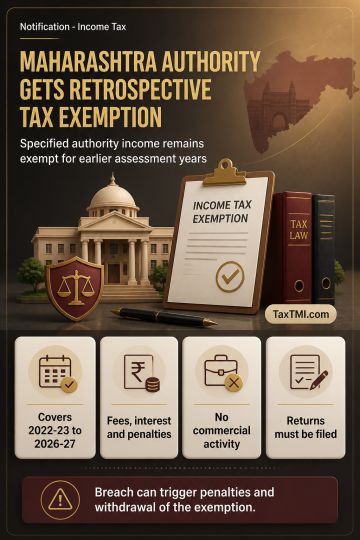
Tax exemption for regulatory authority income applies retrospectively, subject to non-commercial activity, unchanged income sources, and return-filing...
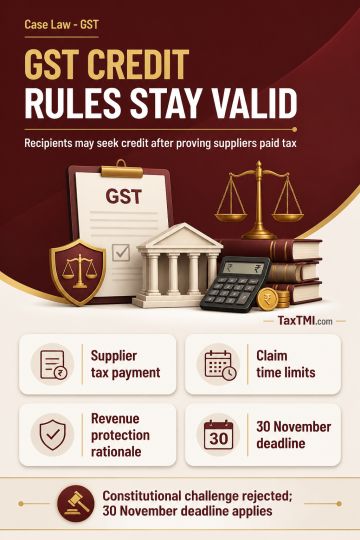
Input tax credit conditions remain constitutionally valid, with eligible recipient claims considered under GST circulars and retrospective filing dead...
Principles of unjust enrichment - Refund amount ordered to be credited to the Consumer Welfare Fund instead of being paid to the appellant - The Tribunal interprets Clause (e) of the third proviso to section 11B of the Central Excise Act, 1944, and concludes that the appellant had indeed borne the burden of the duty and had not passed it on to any other party. - Based on the findings, the Tribunal determines that the appellant is entitled to the refund amount along with interest, which should be reimbursed directly to the appellant instead of being credited to the Consumer Welfare Fund.
Principles of unjust enrichment - Refund amount ordered to be credited to the Consumer Welfare Fund instead of being paid to the appellant - The Tribunal interprets Clause (e) of the third proviso to section 11B of the Central Excise Act, 1944, and concludes that the appellant had indeed borne the burden of the duty and had not passed it on to any other party. - Based on the findings, the Tribunal determines that the appellant is entitled to the refund amount along with interest, which should be reimbursed directly to the appellant instead of being credited to the Consumer Welfare Fund.
Note: It is a system-generated summary and is for quick reference only.
 TaxTMI
 of 4805















 Join Channel


 TaxTMI