Commercial vehicle depreciation, scientifically determined warranty provisions and exempt-income disallowances were resolved in favour of the taxpayer...
Inherited property sale proceeds require capital-gains treatment where ownership is supported by evidence, not suspicion or unverified signature doubt...
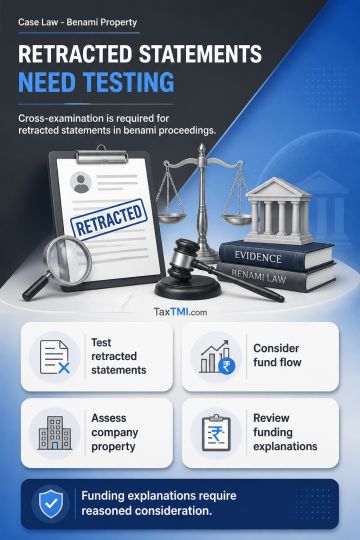
Cross-examination of retracted statements is essential where foundational evidence supports a benami allegation and documented funding explanations re...
Capital-goods exemption covers plant-modernisation accessories, while the import restriction applies only to earlier capital-goods components and spar...
Principles of unjust enrichment - Refund amount ordered to be credited to the Consumer Welfare Fund instead of being paid to the appellant - The Tribunal interprets Clause (e) of the third proviso to section 11B of the Central Excise Act, 1944, and concludes that the appellant had indeed borne the burden of the duty and had not passed it on to any other party. - Based on the findings, the Tribunal determines that the appellant is entitled to the refund amount along with interest, which should be reimbursed directly to the appellant instead of being credited to the Consumer Welfare Fund.
Principles of unjust enrichment - Refund amount ordered to be credited to the Consumer Welfare Fund instead of being paid to the appellant - The Tribunal interprets Clause (e) of the third proviso to section 11B of the Central Excise Act, 1944, and concludes that the appellant had indeed borne the burden of the duty and had not passed it on to any other party. - Based on the findings, the Tribunal determines that the appellant is entitled to the refund amount along with interest, which should be reimbursed directly to the appellant instead of being credited to the Consumer Welfare Fund.
Note: It is a system-generated summary and is for quick reference only.
 TaxTMI
 of 4801



















 Join Channel


 TaxTMI