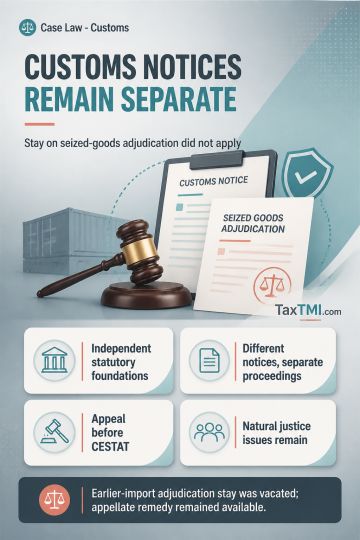
Independent show-cause notices remain separate proceedings, while customs adjudication challenges should ordinarily follow the statutory appellate rem...
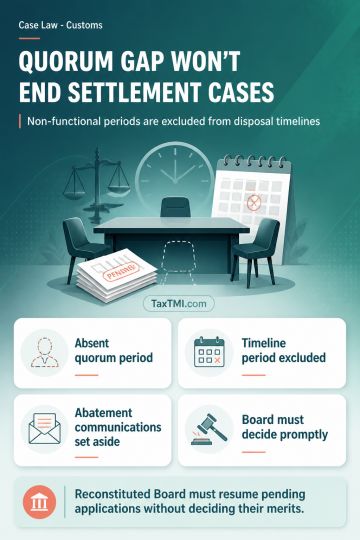
Institutional incapacity in customs settlement proceedings excludes non-functional quorum periods from statutory disposal timelines, preventing automa...
Interactive touchscreen panels with integrated computing functions fall under automatic data-processing machines rather than display monitors for cust...
Ex parte injunction service requirements were substantially met, while civil recovery and SFIO investigation into provident fund defalcation continued...
Principles of unjust enrichment - Refund amount ordered to be credited to the Consumer Welfare Fund instead of being paid to the appellant - The Tribunal interprets Clause (e) of the third proviso to section 11B of the Central Excise Act, 1944, and concludes that the appellant had indeed borne the burden of the duty and had not passed it on to any other party. - Based on the findings, the Tribunal determines that the appellant is entitled to the refund amount along with interest, which should be reimbursed directly to the appellant instead of being credited to the Consumer Welfare Fund.
Principles of unjust enrichment - Refund amount ordered to be credited to the Consumer Welfare Fund instead of being paid to the appellant - The Tribunal interprets Clause (e) of the third proviso to section 11B of the Central Excise Act, 1944, and concludes that the appellant had indeed borne the burden of the duty and had not passed it on to any other party. - Based on the findings, the Tribunal determines that the appellant is entitled to the refund amount along with interest, which should be reimbursed directly to the appellant instead of being credited to the Consumer Welfare Fund.
Note: It is a system-generated summary and is for quick reference only.
 TaxTMI
 of 4801












 Join Channel


 TaxTMI