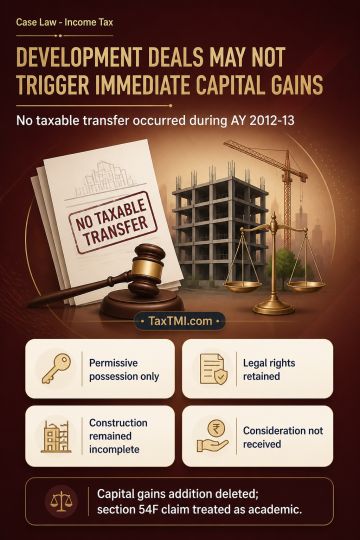
Development agreements require legal possession or effective enjoyment for capital gains transfer; permissive possession and deferred consideration de...
Prolonged sterilisation of development rights supports capital-gains treatment, while business-income disallowances cannot govern capital-gains comput...
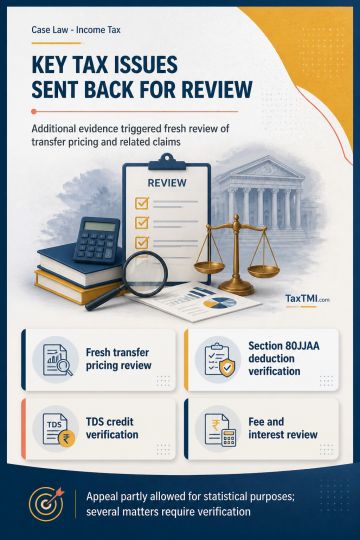
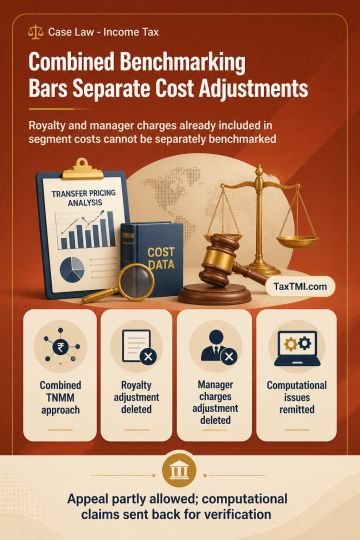
Additional evidence in transfer pricing dispute leads to fresh examination, while tax deductions, TDS credit, fee and refund interest require verifica...
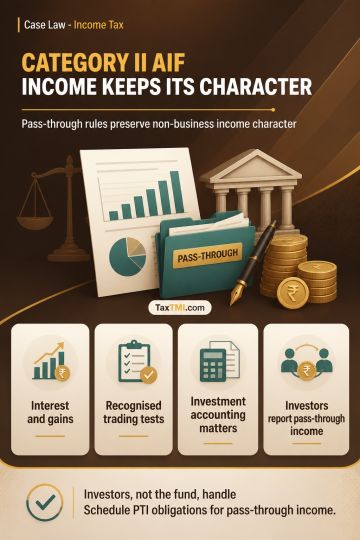
Category II AIF pass-through taxation preserves non-business income character; investment receipts cannot be reclassified without applying recognised ...
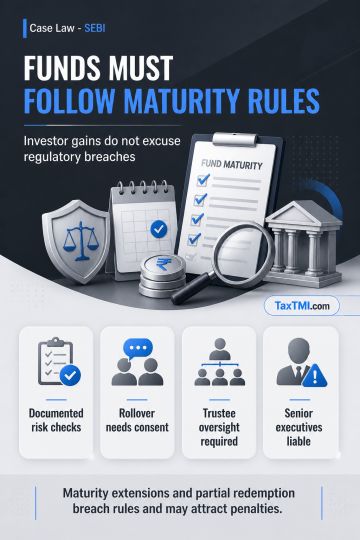
Mutual fund maturity rules require proper rollover, redemption, disclosure, and due diligence; investor gains cannot excuse regulatory breaches or pen...
CENVAT Credit - common inputs/input services used for manufacture of stock transferred exempted goods (lime stone) and dutiable products (Cement/Clinker) - The Tribunal clarified that the presence of two different final products (limestone as exempted and cement/clinker as dutiable) necessitates the maintenance of separate accounts for inputs/input services used. The court rejected the appellant's interpretation and emphasized that the rules apply to their situation, thus upholding the demand for payment under Rule 6(3)(i) due to the appellant's failure to maintain separate accounts. - However, the CESTAT agreed with the appellant regarding the limitation period, noting no grounds for invoking the extended period due to the appellant's transparent documentation and periodic disclosures.
CENVAT Credit - common inputs/input services used for manufacture of stock transferred exempted goods (lime stone) and dutiable products (Cement/Clinker) - The Tribunal clarified that the presence of two different final products (limestone as exempted and cement/clinker as dutiable) necessitates the maintenance of separate accounts for inputs/input services used. The court rejected the appellant's interpretation and emphasized that the rules apply to their situation, thus upholding the demand for payment under Rule 6(3)(i) due to the appellant's failure to maintain separate accounts. - However, the CESTAT agreed with the appellant regarding the limitation period, noting no grounds for invoking the extended period due to the appellant's transparent documentation and periodic disclosures.
Note: It is a system-generated summary and is for quick reference only.
 TaxTMI
 of 4807







 Join Channel


 TaxTMI