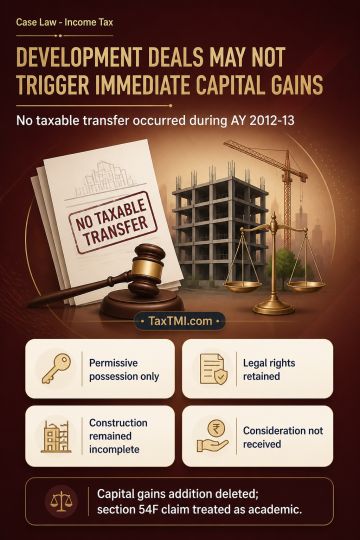
Development agreements require legal possession or effective enjoyment for capital gains transfer; permissive possession and deferred consideration de...
Prolonged sterilisation of development rights supports capital-gains treatment, while business-income disallowances cannot govern capital-gains comput...
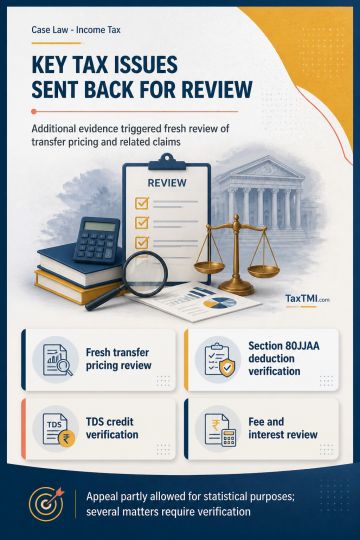
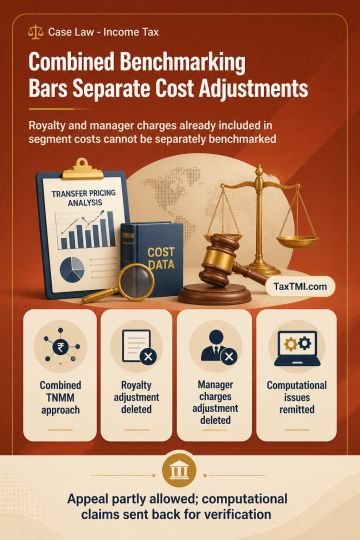
Additional evidence in transfer pricing dispute leads to fresh examination, while tax deductions, TDS credit, fee and refund interest require verifica...
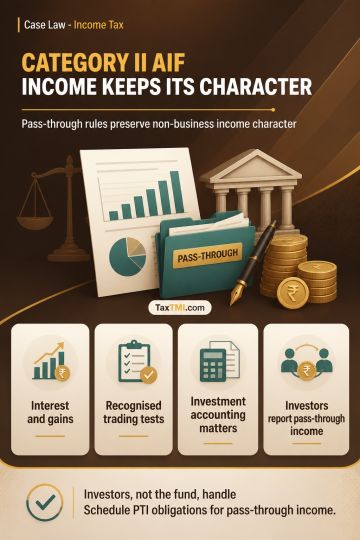
Category II AIF pass-through taxation preserves non-business income character; investment receipts cannot be reclassified without applying recognised ...
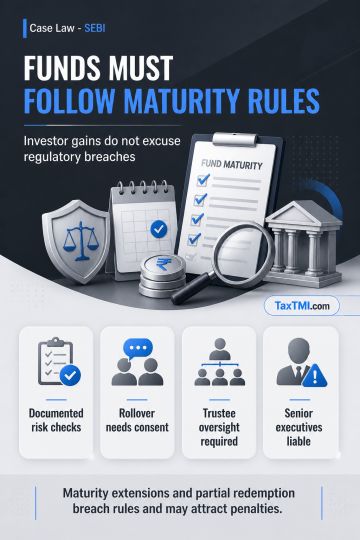
Mutual fund maturity rules require proper rollover, redemption, disclosure, and due diligence; investor gains cannot excuse regulatory breaches or pen...
Income recognition - advances received from clients - AO observed that “out of pocket expenses” had been exclusively kept out of the books and on reimbursement of the sum by the clients to the assessee, it was the duty of the assessee to route the same through the profit and loss account and in the absence of such course being taken, AO added the same amount to the total income of the assessee - The High Court held that, CIT(A) and ITAT have rightly concluded that the assessee received these advances in a fiduciary capacity for specific purposes, not as income. - It was not trading receipt. Therefore, the respondent/assessee was not under any legal obligation to show it as his receipts of money from the clients. The High court found no merit in the Revenue's reliance on Section 145, noting no factual basis indicating that the conditions of Section 145(3) were met.
Income recognition - advances received from clients - AO observed that “out of pocket expenses” had been exclusively kept out of the books and on reimbursement of the sum by the clients to the assessee, it was the duty of the assessee to route the same through the profit and loss account and in the absence of such course being taken, AO added the same amount to the total income of the assessee - The High Court held that, CIT(A) and ITAT have rightly concluded that the assessee received these advances in a fiduciary capacity for specific purposes, not as income. - It was not trading receipt. Therefore, the respondent/assessee was not under any legal obligation to show it as his receipts of money from the clients. The High court found no merit in the Revenue's reliance on Section 145, noting no factual basis indicating that the conditions of Section 145(3) were met.
Note: It is a system-generated summary and is for quick reference only.
 TaxTMI
 of 4807







 Join Channel


 TaxTMI