Specialized Investment Fund distribution now requires dedicated certification, while transitional recognition preserves existing qualified distributor...
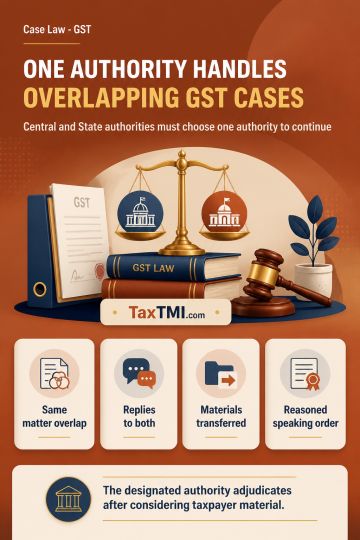
Overlapping GST proceedings require Central and State authorities to designate one competent authority for coordinated adjudication of the same matter...
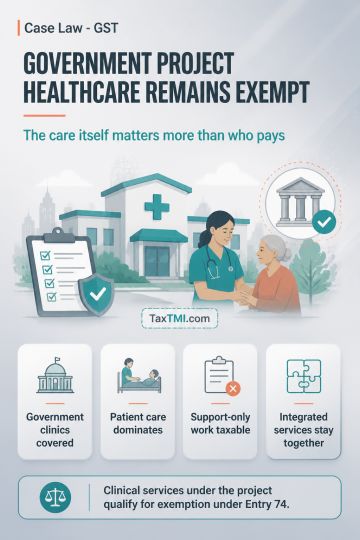
Composite healthcare supplies retain exemption when patient care is the contract's essential character, despite payment through an implementing agency...
Income recognition - advances received from clients - AO observed that “out of pocket expenses” had been exclusively kept out of the books and on reimbursement of the sum by the clients to the assessee, it was the duty of the assessee to route the same through the profit and loss account and in the absence of such course being taken, AO added the same amount to the total income of the assessee - The High Court held that, CIT(A) and ITAT have rightly concluded that the assessee received these advances in a fiduciary capacity for specific purposes, not as income. - It was not trading receipt. Therefore, the respondent/assessee was not under any legal obligation to show it as his receipts of money from the clients. The High court found no merit in the Revenue's reliance on Section 145, noting no factual basis indicating that the conditions of Section 145(3) were met.
Income recognition - advances received from clients - AO observed that “out of pocket expenses” had been exclusively kept out of the books and on reimbursement of the sum by the clients to the assessee, it was the duty of the assessee to route the same through the profit and loss account and in the absence of such course being taken, AO added the same amount to the total income of the assessee - The High Court held that, CIT(A) and ITAT have rightly concluded that the assessee received these advances in a fiduciary capacity for specific purposes, not as income. - It was not trading receipt. Therefore, the respondent/assessee was not under any legal obligation to show it as his receipts of money from the clients. The High court found no merit in the Revenue's reliance on Section 145, noting no factual basis indicating that the conditions of Section 145(3) were met.
Note: It is a system-generated summary and is for quick reference only.
 TaxTMI
 of 4805











 Join Channel


 TaxTMI