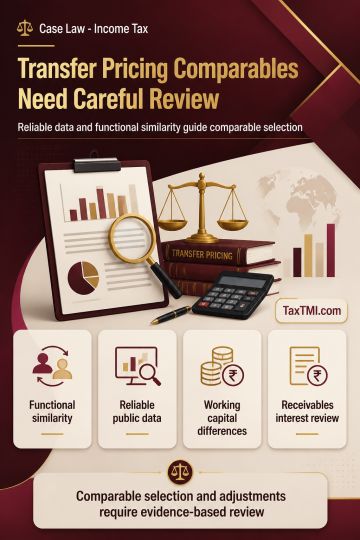
Transfer pricing comparability requires functional alignment, reliable financial data, and careful review of working capital and receivables adjustmen...
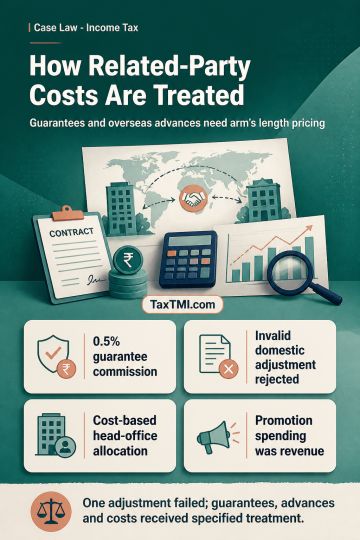
Transfer pricing rules require benchmarking corporate guarantees and associated-enterprise advances, while invalid domestic-transaction adjustments ca...
Dishonour of Cheque - The High Court observed that, the presumption under Section 139 of the N.I. Act is a presumption of law, as distinguished from the presumption of facts. Presumptions are rules of evidence and do not conflict with the presumption of innocence, which requires the Prosecution to prove the case against the Accused beyond reasonable doubt - The burden of proof was however on the person who wanted to rebut the presumption. - The court found that the applicant's attempts to rebut the presumption were unsuccessful. The evidence supported the transaction that led to the issuance of the cheques, and the applicant's defense was deemed not credible.
Dishonour of Cheque - The High Court observed that, the presumption under Section 139 of the N.I. Act is a presumption of law, as distinguished from the presumption of facts. Presumptions are rules of evidence and do not conflict with the presumption of innocence, which requires the Prosecution to prove the case against the Accused beyond reasonable doubt - The burden of proof was however on the person who wanted to rebut the presumption. - The court found that the applicant's attempts to rebut the presumption were unsuccessful. The evidence supported the transaction that led to the issuance of the cheques, and the applicant's defense was deemed not credible.
Note: It is a system-generated summary and is for quick reference only.
 TaxTMI
 of 4803









 Join Channel


 TaxTMI
