Transfer pricing and tax deductions upheld on established principles, while employee contributions and warranty provisions returned for fresh examinat...
Captive transfer pricing relies on industrial consumer tariffs, while genuine quotations can benchmark effluent treatment transfers under the Other Me...
Specific tariff classification for ophthalmic instruments and extended limitation principles determine the treatment of duty demands, confiscation, an...
Integrated golf function determines classification, placing launch monitors and simulators under other golf equipment rather than measuring instrument...
Public servant status under anti-corruption law extends to recognised stock exchange leadership; constitutional and sanction challenges do not succeed...
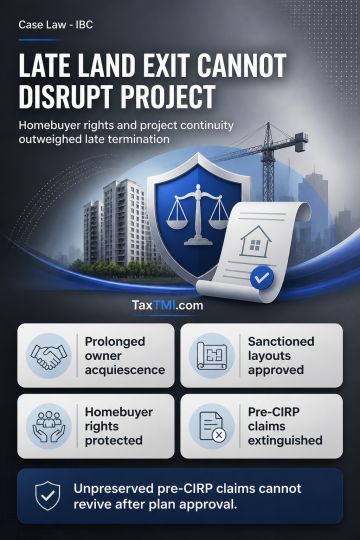
Acquiescence, homebuyer protection and clean-slate resolution principles prevent landowners from disrupting an integrated project through late termina...
Addition u/s 56(2)(viib) r.w.r 11UA - excess premium charged - issuance of preference shares to the director/ex-director of the assessee company - The ITAT held that there was no justification for the A.O to have triggered the deeming provisions of Section 56(2)(viib) i.e a counter tax evasion provision - The ITAT addressed the valuation dispute, emphasizing the distinction between preference shares and equity shares, particularly focusing on their characteristics and the applicable methods for determining their FMV. It was noted that preference shares, due to their nature, could not be valued using the same method as equity shares. - Matter restored back for redetermine the FMV of the subject preference shares subject to the tribunal's observations recorded as regards the mistakes/infirmities.
Addition u/s 56(2)(viib) r.w.r 11UA - excess premium charged - issuance of preference shares to the director/ex-director of the assessee company - The ITAT held that there was no justification for the A.O to have triggered the deeming provisions of Section 56(2)(viib) i.e a counter tax evasion provision - The ITAT addressed the valuation dispute, emphasizing the distinction between preference shares and equity shares, particularly focusing on their characteristics and the applicable methods for determining their FMV. It was noted that preference shares, due to their nature, could not be valued using the same method as equity shares. - Matter restored back for redetermine the FMV of the subject preference shares subject to the tribunal's observations recorded as regards the mistakes/infirmities.
Note: It is a system-generated summary and is for quick reference only.
 TaxTMI
  TaxTMI
 of 4811
















 Join Channel


