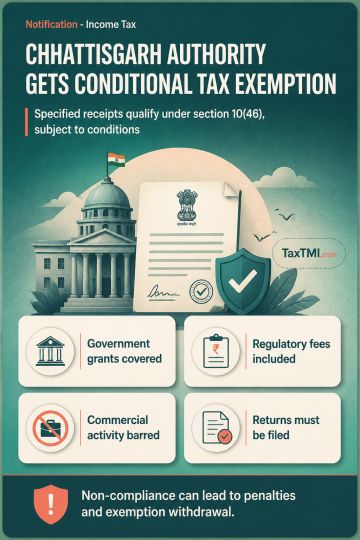
Specified regulatory authority income receives conditional tax exemption, subject to non-commercial activity, unchanged income character, and return f...
Tax exemption for regulatory authority income applies retrospectively, subject to non-commercial activity, unchanged income sources, and return-filing...
Input tax credit conditions remain constitutionally valid, with eligible recipient claims considered under GST circulars and retrospective filing dead...
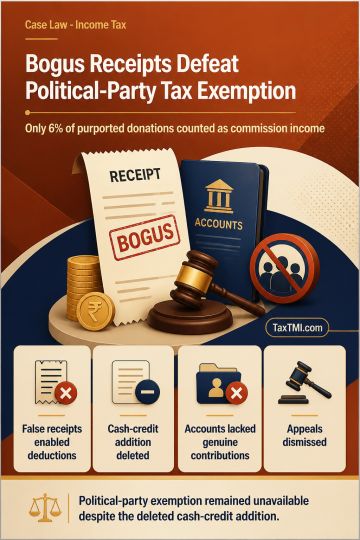
Bogus donation receipts justified commission income assessment and defeated political-party tax exemption for inaccurate accounts and reporting failur...
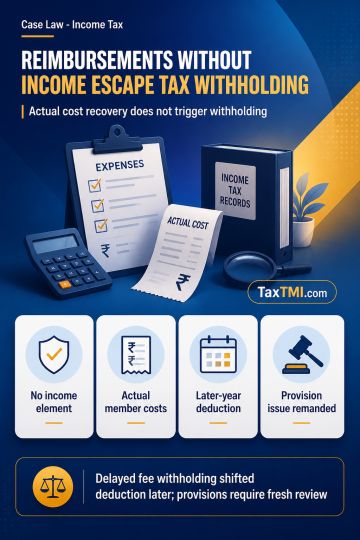
Pure reimbursement without income element escapes tax withholding, while delayed withholding and unsupported provisions face deferred or renewed scrut...
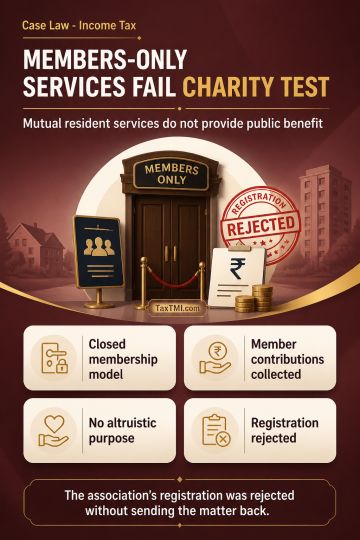
Public benefit requirement defeats charitable registration where residents' association services are reciprocal, member-only facilities governed by mu...
Addition u/s 56(2)(viib) r.w.r 11UA - excess premium charged - issuance of preference shares to the director/ex-director of the assessee company - The ITAT held that there was no justification for the A.O to have triggered the deeming provisions of Section 56(2)(viib) i.e a counter tax evasion provision - The ITAT addressed the valuation dispute, emphasizing the distinction between preference shares and equity shares, particularly focusing on their characteristics and the applicable methods for determining their FMV. It was noted that preference shares, due to their nature, could not be valued using the same method as equity shares. - Matter restored back for redetermine the FMV of the subject preference shares subject to the tribunal's observations recorded as regards the mistakes/infirmities.
Addition u/s 56(2)(viib) r.w.r 11UA - excess premium charged - issuance of preference shares to the director/ex-director of the assessee company - The ITAT held that there was no justification for the A.O to have triggered the deeming provisions of Section 56(2)(viib) i.e a counter tax evasion provision - The ITAT addressed the valuation dispute, emphasizing the distinction between preference shares and equity shares, particularly focusing on their characteristics and the applicable methods for determining their FMV. It was noted that preference shares, due to their nature, could not be valued using the same method as equity shares. - Matter restored back for redetermine the FMV of the subject preference shares subject to the tribunal's observations recorded as regards the mistakes/infirmities.
Note: It is a system-generated summary and is for quick reference only.
 TaxTMI
  TaxTMI
 of 4807









 Join Channel