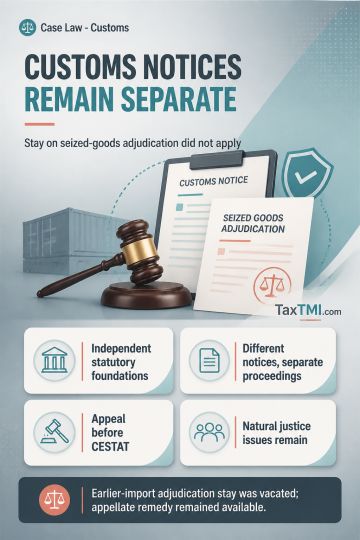
Independent show-cause notices remain separate proceedings, while customs adjudication challenges should ordinarily follow the statutory appellate rem...
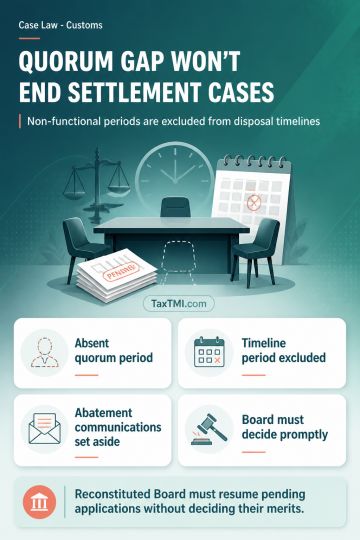
Institutional incapacity in customs settlement proceedings excludes non-functional quorum periods from statutory disposal timelines, preventing automa...
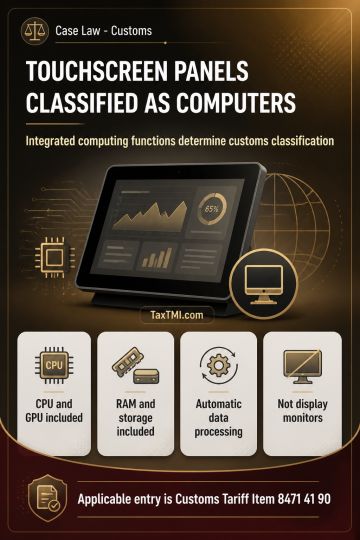
Interactive touchscreen panels with integrated computing functions fall under automatic data-processing machines rather than display monitors for cust...
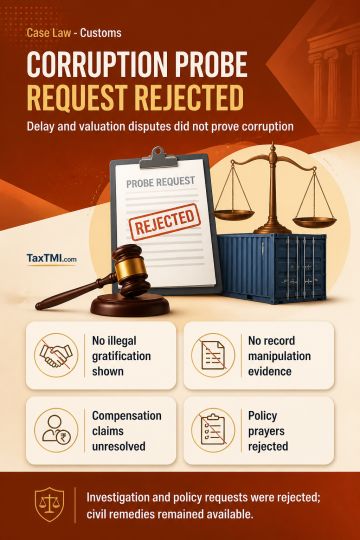
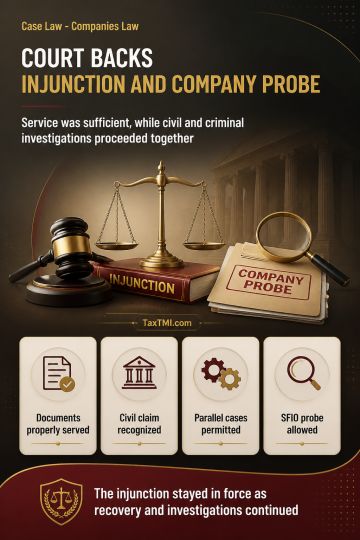
Ex parte injunction service requirements were substantially met, while civil recovery and SFIO investigation into provident fund defalcation continued...
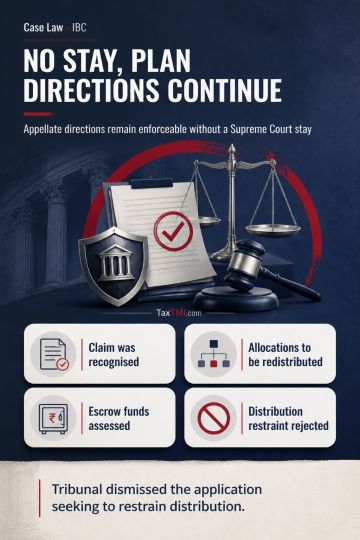
Enforcement of resolution-plan directions continues without a Supreme Court stay, preventing suspension of redistribution and escrowed-fund distributi...
Third-party ownership claims over attached property require Special Court adjudication where purchasers lack registered sale deeds and bona fides rema...
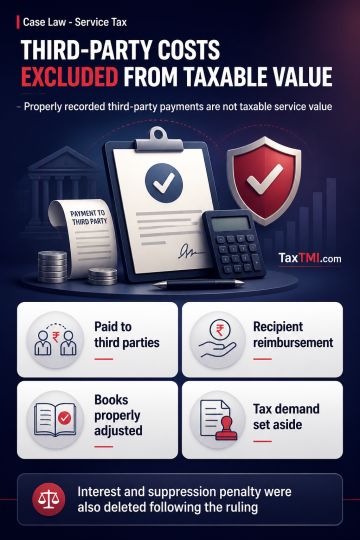
Pure-agent reimbursements in clearing and forwarding services are excluded from taxable value when qualifying third-party payments are properly record...
Page of 4813
Press 'Enter' after typing page number.
641 to 660 of 96257 Results
❮
❯
❯❯
0 / 200
Expand Note
Add to Folder
No Folders have been created
+
Are you sure you want to delete "My most important" ?
Condonation of delay by applying Section 5 of the Limitation Act - Section 378(5) of CrPC - In the present case, there is no such exclusionary provision under Section 378 of CrPC, or at any other place in the Code. The benefit of Section 5 read with Sections 2 and 3 of the Limitation Act, 1963 can therefore be availed in an appeal against acquittal. There is no force in the contentions raised by the appellants as regards the non-application of Section 5 of the Limitation Act in the present case and the appeal is therefore dismissed.
Condonation of delay by applying Section 5 of the Limitation Act - Section 378(5) of CrPC - In the present case, there is no such exclusionary provision under Section 378 of CrPC, or at any other place in the Code. The benefit of Section 5 read with Sections 2 and 3 of the Limitation Act, 1963 can therefore be availed in an appeal against acquittal. There is no force in the contentions raised by the appellants as regards the non-application of Section 5 of the Limitation Act in the present case and the appeal is therefore dismissed.
Note: It is a system-generated summary and is for quick reference only.
 TaxTMI
  TaxTMI
 of 4813






 Join Channel